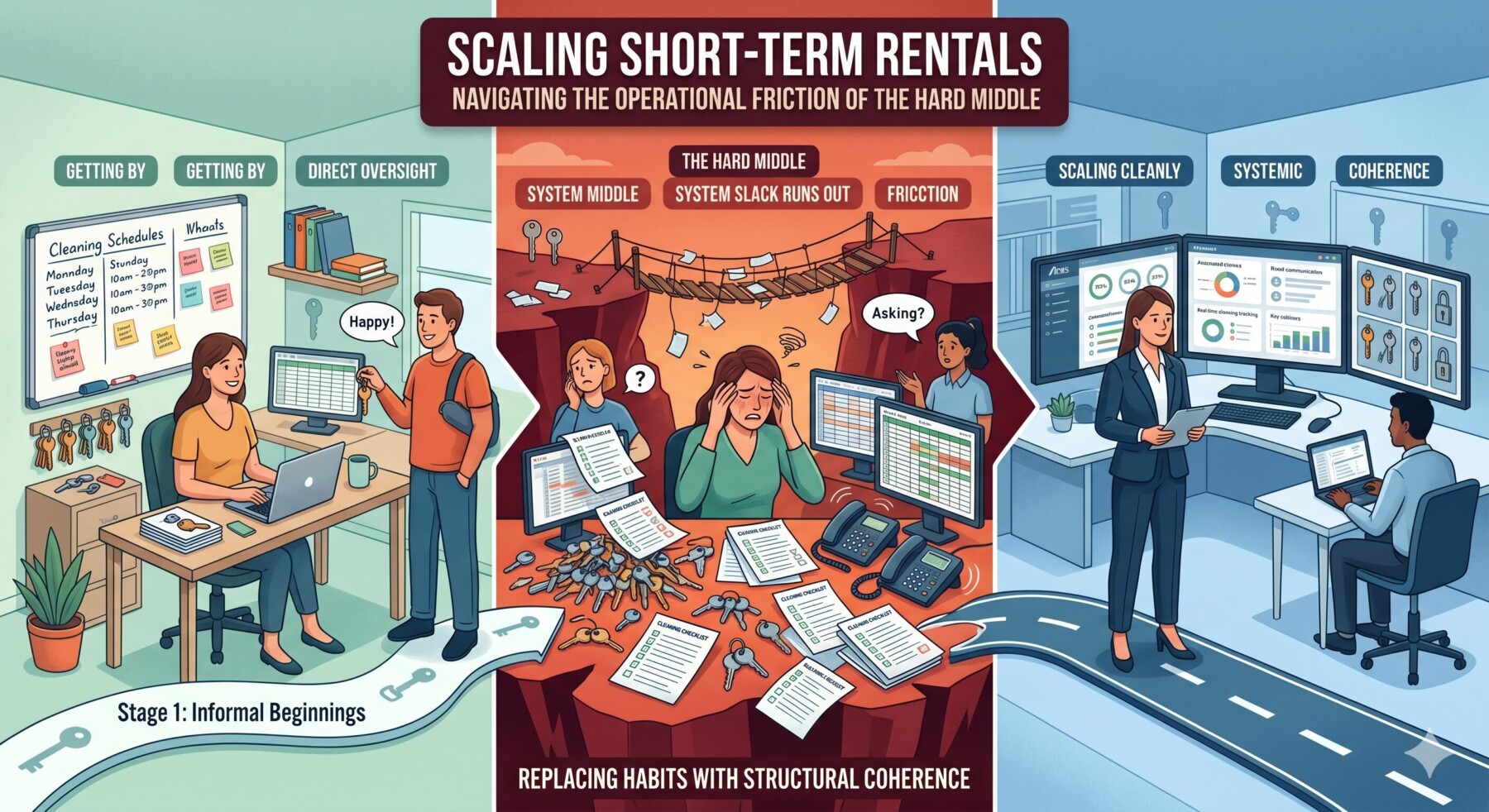
For years, innovation in STR focused primarily on building new products. Revenue management platforms became more sophisticated, communication systems more automated, and operational tooling increasingly specialised. Entire categories emerged around workflow management, screening, fintech, reporting, automation, and smart access.
That innovation helped professionalise the sector. It also means the ecosystem is now entering a different stage of maturity.
The Market is No Longer Constrained by a Lack of Software
The STR industry is no longer struggling because solutions do not exist. If anything, the opposite is increasingly true.
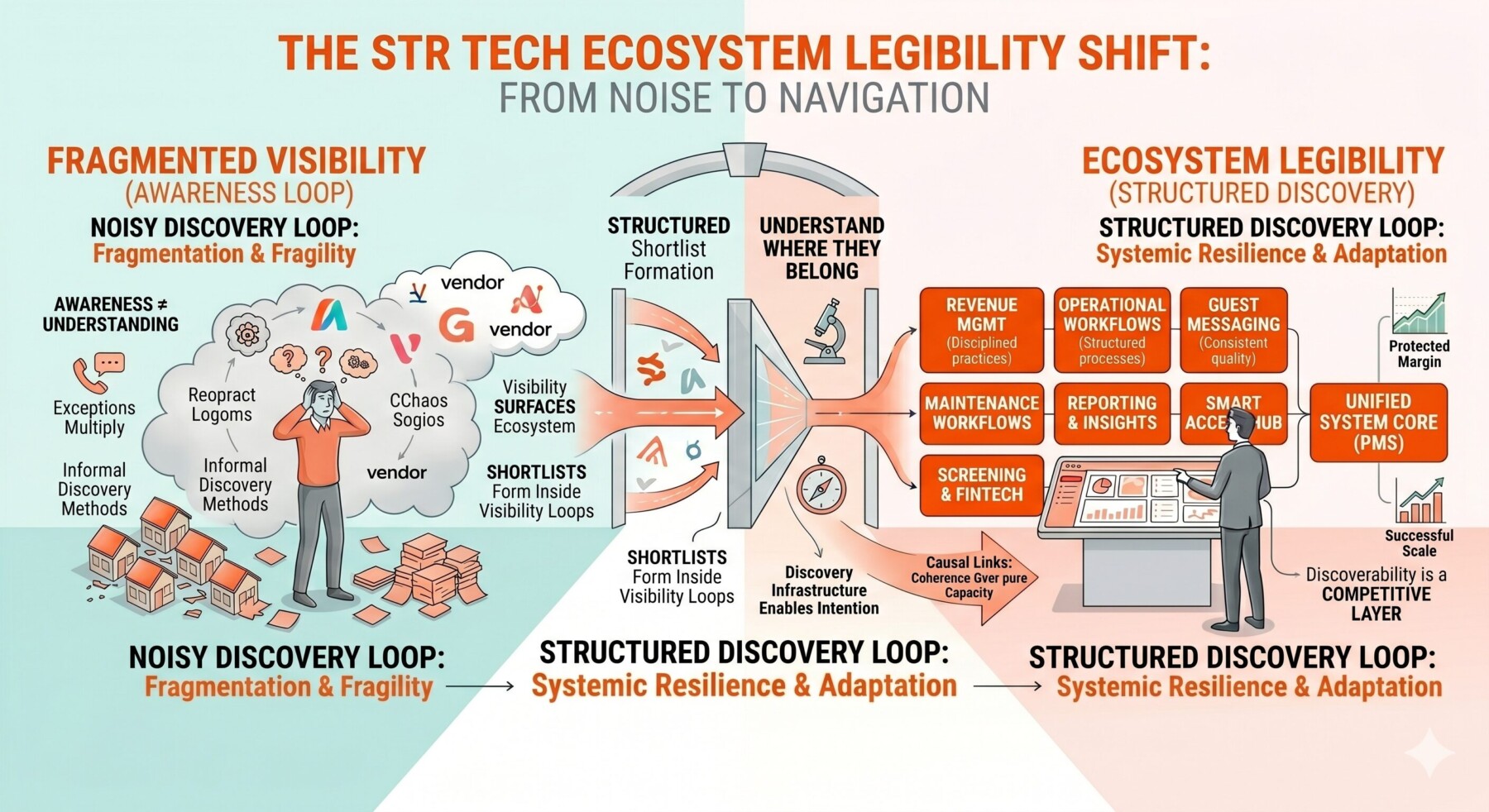
The challenge now is that the ecosystem has become large enough, specialised enough, and context-dependent enough that many operators struggle to interpret it clearly. Categories overlap. Positioning becomes broader. Operational requirements become more nuanced.
Buyers rely heavily on fragmented discovery systems shaped by visibility patterns rather than structured ecosystem understanding. At that point, navigation itself starts becoming part of the market’s value layer.
Mature Ecosystems Eventually Build Discovery Infrastructure
This pattern exists across technology markets. Enterprise software built comparison platforms and review environments. Developer ecosystems created repositories and marketplaces. E-commerce sectors developed structured discovery layers that helped buyers navigate increasingly crowded supplier landscapes.
Those systems emerged because ecosystems became too large and specialised to navigate efficiently through fragmented awareness alone. Discovery infrastructure solves that problem by helping markets become more legible.
It allows buyers to:
-
Search according to relevance.
-
Compare categories more intelligently.
-
Evaluate fit more efficiently.
-
Understand where vendors belong inside the wider ecosystem.
At the same time, it gives vendors clearer ways to communicate who they serve best and how they relate to increasingly specialised operational contexts.
Discoverability is Becoming a Competitive Layer
As this shift accelerates, discoverability itself starts becoming part of the competition. The vendors most likely to succeed are no longer simply the ones with strong products. Increasingly, they are the companies that buyers can understand quickly.
That changes how positioning works. Broad visibility remains useful, but interpretability becomes equally important. Buyers need to understand where solutions fit, who they are genuinely designed for, and why they belong on the shortlist.
In crowded ecosystems, clarity becomes a competitive advantage.
The Next Infrastructure Layer is Ecosystem Navigation
The STR market already contains substantial innovation and specialist capability. What it increasingly lacks is interpretability.
Operators need clearer ways to explore the ecosystem according to operational context rather than generic exposure. Vendors need more structured ways to communicate relevance beyond broad awareness alone.
That is the role SCALE Connect is designed to play. It is not simply listing vendors, but helping structure how the ecosystem itself is navigated. Because once markets reach sufficient scale, navigation itself becomes infrastructure.
The STR ecosystem now has the depth and complexity of a mature software market.
The next stage is helping operators and vendors navigate it more intelligently. SCALE Connect is being built as a structured discovery layer for the STR ecosystem.
→ Request early access to SCALE Connect
→ Position your company within the ecosystem