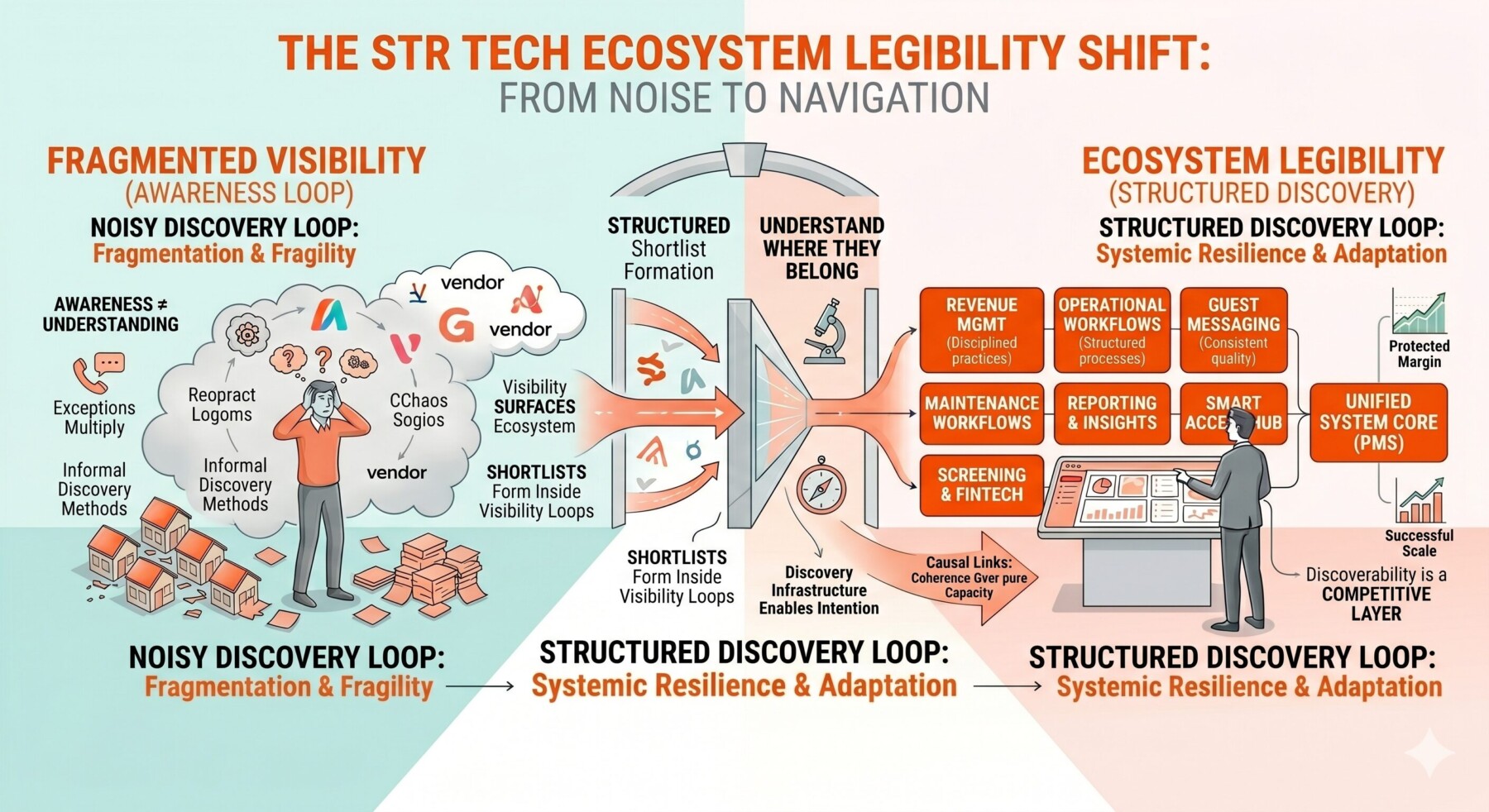
The STR technology ecosystem has become remarkably visible. Operators encounter vendors constantly through conferences, LinkedIn discussions, webinars, newsletters, partnerships, integrations, and peer recommendations.
From the outside, the market can appear highly active and relatively easy to navigate. Buyers recognise company names, see products discussed publicly, and feel increasingly connected to the ecosystem around them. That visibility creates a natural assumption: that operators are seeing the market clearly. In practice, many are seeing only the visible layer of it.
Awareness and Understanding Are Not the Same Thing
Most operators today can recognise a surprisingly large number of vendor brands. They know which companies dominate conference circuits, which platforms appear repeatedly on social media, and which names circulate most heavily inside industry conversations.
Yet once a genuine buying process begins, many buyers still struggle to answer much more important questions: Which solutions are genuinely designed for businesses like ours? Which tools fit our operating model rather than simply the broadest possible market? Which systems are strongest in our specific context, geography, or stage of growth?
That distinction matters because awareness is not the same thing as orientation. Visibility helps buyers recognise companies. Discovery helps them understand relevance. And as ecosystems become more specialised, those two things begin drifting further apart.
Buyers Are Often Evaluating the Visible Layer of the Ecosystem
One of the more interesting shifts happening in STR is that operators increasingly believe they are evaluating “the market” when in reality they are evaluating the visible layer of the market. That visible layer is shaped by a relatively narrow set of discovery systems:
-
Conferences and sponsorship visibility
-
Peer recommendation loops
-
LinkedIn presence
-
Search visibility
-
Integration partnerships
-
Distribution reach
-
Existing market familiarity
None of those things is inherently problematic. Visibility matters, and companies that invest in awareness are often doing exactly what growing ecosystems reward. The issue is that visibility does not necessarily correlate with relevance.
A vendor can appear constantly inside industry conversation while still being poorly suited to a particular operational context. At the same time, a more relevant solution may never enter the buyer’s field of view at all. That creates an increasingly important distortion. The ecosystem operators evaluate is not always the ecosystem that actually exists. It is often the ecosystem surfaced by visibility systems.
The Ecosystem Has Outgrown Informal Discovery
That problem becomes more significant because the STR market is no longer small. The ecosystem now contains hundreds of specialist providers across revenue management, automation, operations, communication, reporting, fintech, screening, workflow management, and smart access.
At this level of scale, informal discovery starts to weaken. Search reflects digital authority more than operational fit. Peer recommendations reflect the context of the recommending operator. Events expose buyers to vendors present at a particular moment in time rather than the wider ecosystem itself.
The result is that buyers often build shortlists inside surprisingly narrow visibility loops. And as categories become more specialised, those loops become increasingly influential in shaping market outcomes.
Visibility is Starting to Shape Competition Itself
This is where the market begins changing in a more structural way. In mature ecosystems, vendors no longer compete only on product quality. They also compete on discoverability.
In other words, companies increasingly compete on whether the right buyers are likely to encounter them, understand where they fit, and place them inside the correct operational context. That changes how competition behaves.
The most visible vendors often become the most frequently evaluated. The most frequently evaluated become the most widely discussed. That discussion then reinforces visibility again. Over time, visibility starts influencing shortlist formation itself. And once that happens, the market begins rewarding interpretability and discovery positioning alongside product capability.
The Next Stage of Maturity is Ecosystem Legibility
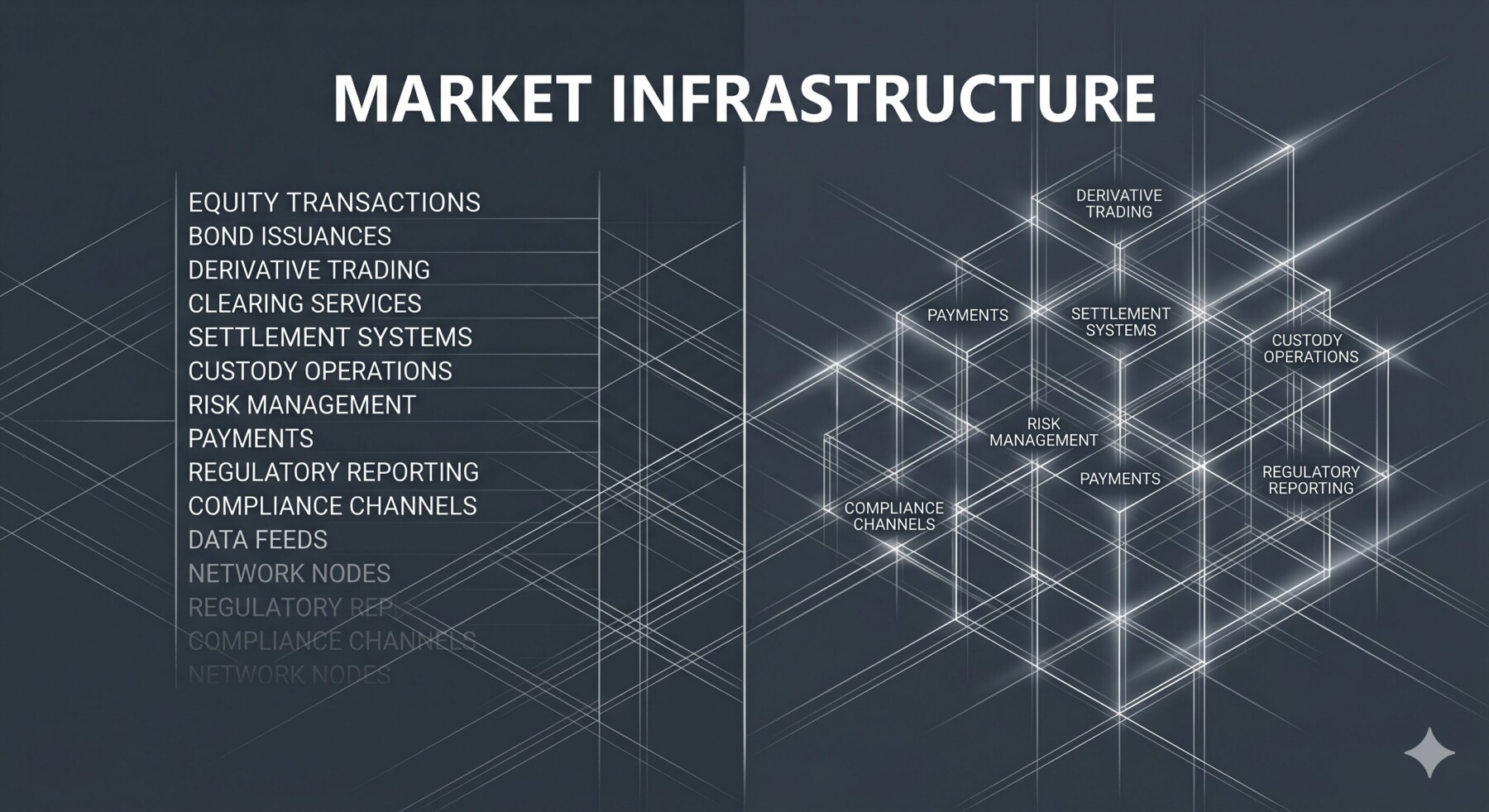
This is not unique to STR. Most mature technology ecosystems eventually build discovery infrastructure once the market becomes too layered and specialised to navigate efficiently through fragmented awareness alone.
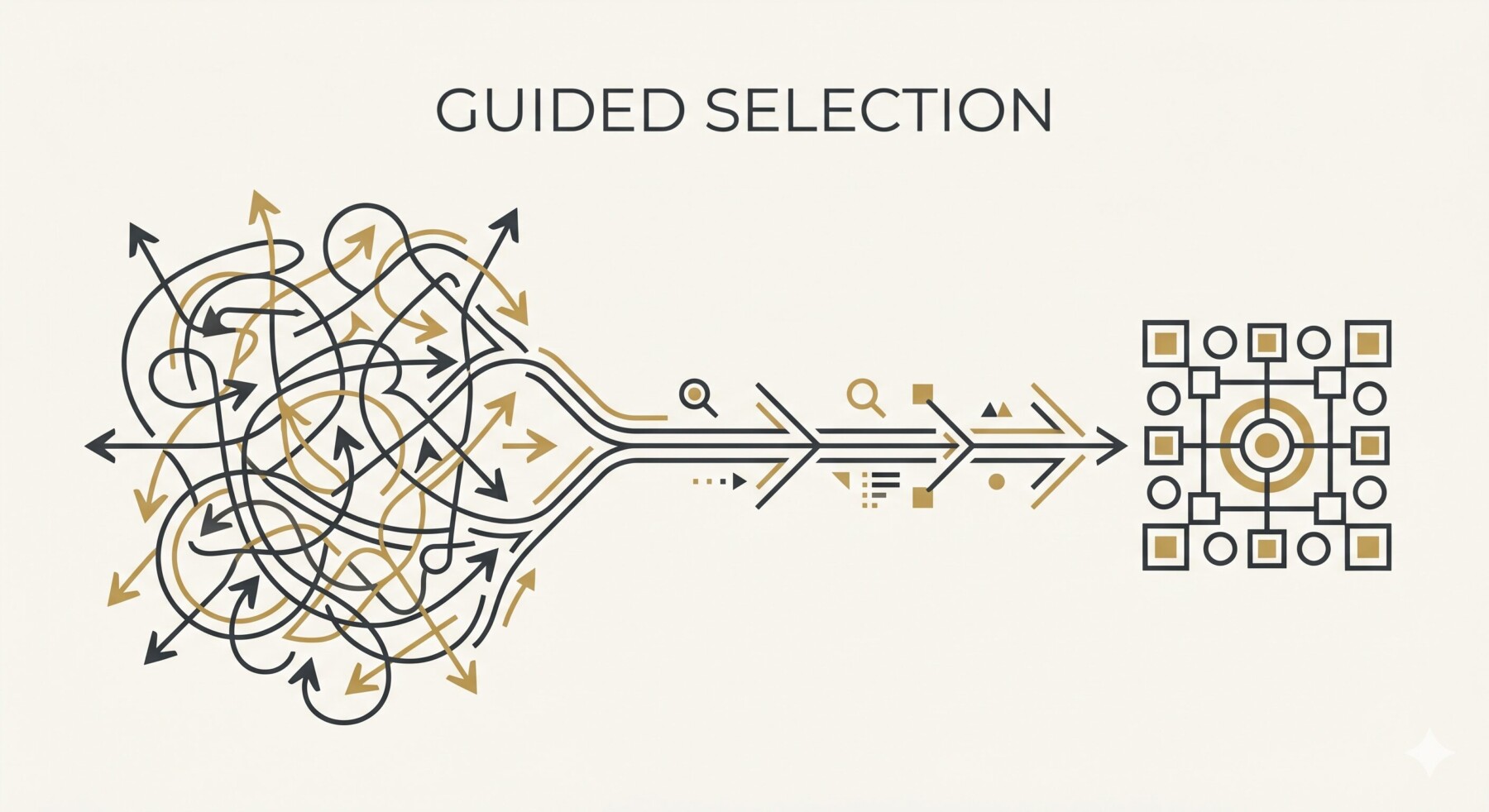
That infrastructure does not replace conferences, recommendations, or relationships. What it does provide is structure. It helps buyers understand categories more clearly, compare relevance more intelligently, and explore the ecosystem according to fit rather than exposure alone.
That is increasingly the transition the STR market is beginning to make. The next stage of maturity is not simply more visibility. It is a more legible ecosystem.
The STR ecosystem is becoming too large and specialised to navigate efficiently through fragmented visibility alone.
SCALE Connect is being developed to explore how structured discovery and ecosystem navigation can evolve within STR.
→ Join the early access list
→ Follow the build of SCALE Connect