The Limitation of Mere Presence
One of the risks of ecosystem platforms is that vendors misunderstand what they are for. They assume a listing is the value.
In reality, the listing is only the container. The real value is what the listing makes possible. In a crowded market, a company profile is useful only if it helps the right buyer understand where that company fits. That is why a listing is not, by itself, a positioning strategy.
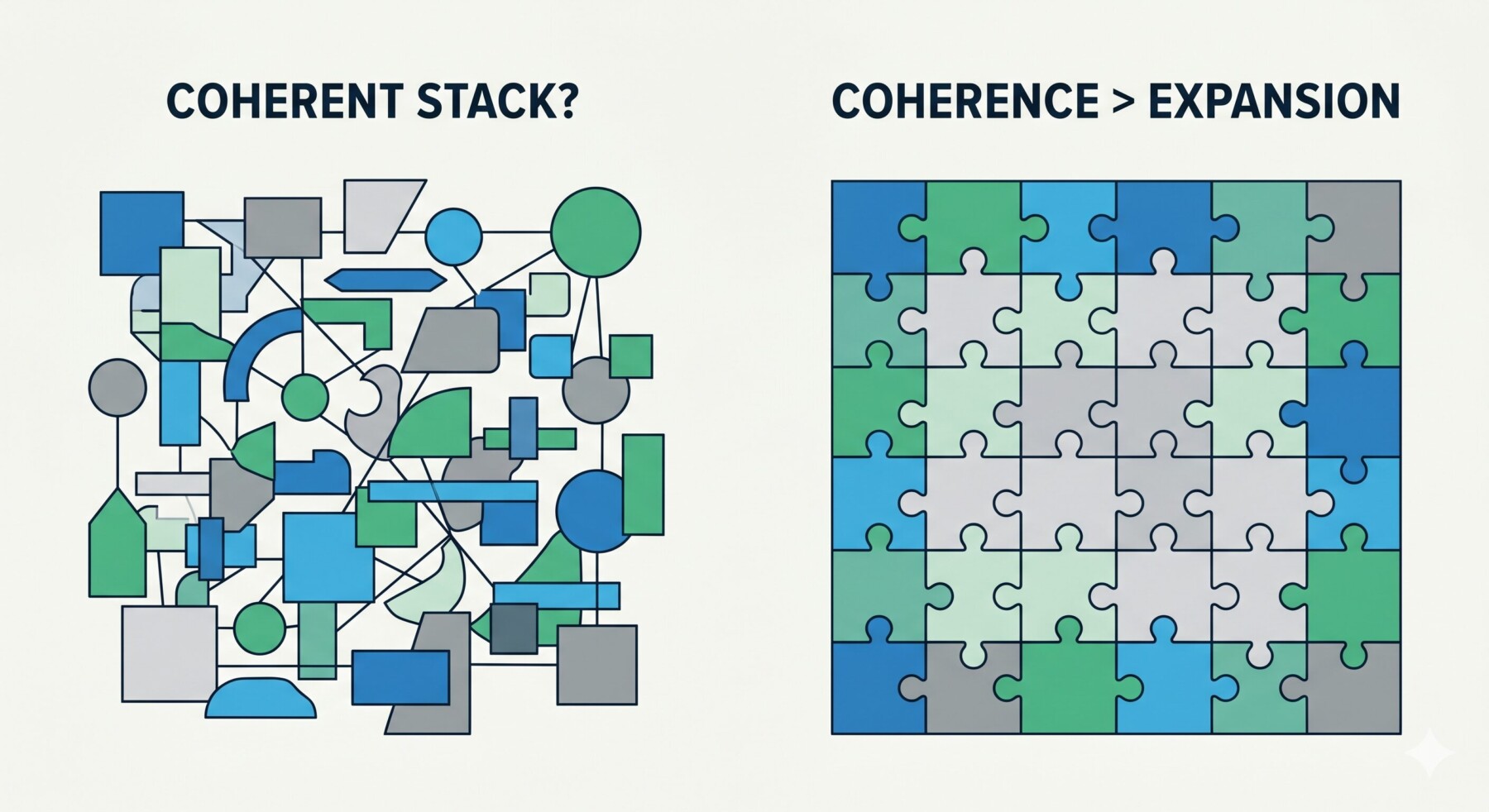
This matters because maturing ecosystems do not reward mere presence for very long. Once many companies are visible in some form, the real question becomes interpretability. Can the buyer understand what this company does, who it is best suited to serve, what context it belongs in, and how it differs meaningfully from nearby alternatives? If the answer is no, then being listed does not solve much. The company is present, but still not legible.
Moving Beyond the Basic Directory
This is why strong ecosystem platforms should not be thought of as directories in the narrow sense. A directory merely stores names. A useful ecosystem layer helps structure meaning. It gives vendors a way to express category, fit, use case, integrations, geography, and relevance clearly enough that buyers can place them within the market.
That is a much more strategic function. For vendors, it also requires a different mindset. The job is no longer just to “appear” on the platform. The job is to use the platform to communicate fit. That means thinking carefully about operator segment, use case clarity, ecosystem placement, and what a buyer should understand within the first few seconds of reading the profile.
The Friction of Generic Messaging
Many companies are weaker at this than they assume. They describe themselves too broadly. They over-index on generic feature lists and under-explain who they are really for. They sound capable, but not legible. In a sales conversation, those gaps may get corrected. In a discovery environment, they become friction.
This is what makes platforms like SCALE Connect valuable when used properly. They create the conditions for structured positioning. But the vendor still has to do the work of being clear.
Transforming a Listing Into an Asset
A good listing, then, is not a static page. It is a positioning asset. Vendors that treat it that way will get far more value from the ecosystem than those who treat it as just another place to appear.
SCALE Connect helps vendors do both by giving companies a clearer way to present their place in the STR ecosystem.