Breaking the Threshold: How to Make Direct Bookings Overtake OTA Bookings
Posted on - November 1st 2025
Following last month’s insightful look at the Casago acquisition of Vacasa with Richard Vaughton of Yes Consulting, we’re back with another instalment of Richard’s POV.
This month, we’re tackling a challenge faced by every short-term rental business: How can we make direct bookings the dominant force?
In honor of this month’s Book Direct Guest Education Day, we asked Richard for his POV on what it takes to shift the balance away from OTAs.
Breaking the Threshold: How to Make Direct Bookings Overtake OTA Bookings
The Scale team posed a seemingly simple question:
What do we need to do for direct bookings to surpass OTA bookings? Is it truly achievable?
Before delving into an answer, let’s establish some key facts. These are often reliant on hotel comparative data, being a more mature and documented and statistically supported industry. This image based on hotels to 2020 shows the general mix of booking channels.
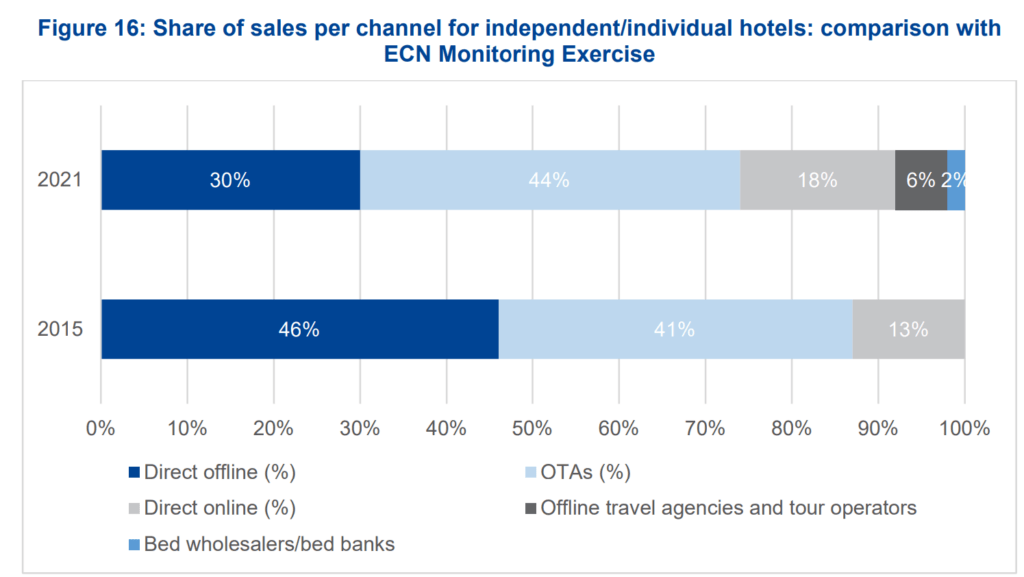
- Urban destinations rely far more on OTAs than leisure markets. Reports suggest that direct bookings in some urban STR markets can be as low as 3%, with even those often being repeat stays or extensions. In leisure destinations we see 35-45% direct bookings often quoted for Europe and substantially more in the USA
- The STR industry is flooded with tech companies promising a direct booking revolution: websites, marketing automation, and other tools. But this is not a simple tech problem; it’s a psychological and community-driven challenge with perceived OTA greed as a marketing driver
- Some companies achieve 70%+ direct bookings, while others barely hit 10%. What sets them apart?
- OTA commissions, often viewed as a parasitic 15%+ fee, are seen as unfair, given the hard work of operators. Yet, direct bookings often mean trading OTA dependence for Google dependence—which raises the question: Which powerful intermediary do you choose?
- Brand recognition is critical. How many STR brands would you confidently book with directly? More importantly, how many unfamiliar brands would you trust with your stay?
- Organic and paid traffic both count as direct bookings. Repeat bookings, however, should always be direct and even VRBO’s stage mantra suggests this! So direct bookings of interest are new ones
The Answer? A Multi-Faceted Approach
1. Invest in Building a Direct Booking Business
At the property or management level, direct booking success boils down to investment and effort. Most high-direct-booking businesses are in leisure destinations and have been established for years. Key factors influencing direct success:
Portfolio Size Matters:
- More properties = better search visibility
- Larger guest history = more return bookings. Loyalty!
- More capital = greater investment in direct marketing
- Stronger owner and guest referral networks
- Established quality hyperlocal brand = inventory growth and web presence, a flywheel effect
2. Web Development: Your Direct Booking Foundation
A well-optimised website is more than just a booking portal; it is a trust-building machine. Key elements include:
- Brand-Aligned Design & UX: Professional, intuitive, and visually compelling.
- SEO & Structure: PLEASE: No subdomain booking engines (they dilute SEO impact).
- Trust Signals:
- Reviews & testimonials
- Security transaction assurances
- Visible contact details (phone, WhatsApp, chat support)
- Awards
- Optimised Booking Flow:
- Mobile-first, ultra-fast pages
- Short, intuitive booking steps
- Multiple payment options
- Engaging Content:
- High-quality property descriptions
- Local area guides & travel tips
- Video content for immersive experiences
- Referral Capture: Guests who find you on OTAs should see a clear incentive to book directly next time
- OTA Brand Alignment: If guests find your property on Airbnb or Booking.com, make sure your direct booking option is more appealing
Web – PMS
If adopting a web PMS insist that they give projected improvements in direct bookings and evidence of their successes. It’s not good enough to say: “this is our premium model.”.
Websites are software, brands require human touch and establishing a great search presence means a lot of non-software work. Charging for direct bookings on a PMS, in my opinion, is taxing your own investments and hard work. A fixed cost is the best approach, unless of course you plan on no direct bookings or process them off system!
Target: For high-performance unique visitor traffic conversion benchmarks aim for 1 direct booking per 50-150 unique visitors. Check your stats today!
3. Execution & Continuous Effort
A website and or social media alone won’t guarantee direct bookings. Success requires ongoing execution across multiple fronts:
- SEO & Content Strategy: Forget generic AI-generated content. Google still prioritises E-A-T (Expertise, Authority, Trustworthiness)
- In-depth, useful content over keyword stuffing
- Authoritative, expert-driven guides
- Social Media: Video-based marketing (Instagram, TikTok, YouTube etc) is increasingly dominant
- Public Relations: Press recommendations drive SEO credibility and guest confidence
- Paid Ads: PPC can be a money pit if mismanaged. Effective campaigns demand:
- Alignment between SEO, ad targeting, and web pages
- Expert oversight to track and optimise ROI
- Partnerships & Local Networks: Collaborate with DMOs, local businesses, and referral networks to generate inbound bookings
- Become the local expert
4. Build a Recognisable Brand
Branding isn’t just logos and colors. It’s the full guest experience, from online presence, occupation, communication to check-out. Make memories for people! They tell others. The brand should run through your company like a “stick of rock”.
- Builds guest trust (crucial for direct bookings)
- Encourages repeat visits
- Enhances long-term business valuation
Operators must align their brand with their aspirations, market niche, and long-term goals. Direct bookings aren’t just about cutting OTA fees—they’re about building an asset.
5. The Cost of Change: Is It Worth It?
- Suppose a marketing manager costs €40K per year
- If the average booking generates €500, with a 20% OTA commission, this means:
- 400 new direct bookings needed to break even
- If replacing OTA bookings (15% commission), this covers €267K in bookings
- Additional costs: tech stack, advertising, SEO, PR may double initial costs estimates
Direct booking efforts must be funded and very carefully calculated. Just as OTAs reinvest heavily in marketing, STR operators must accept that reducing OTA reliance requires structured investment, skills and KPIs.
The OTA approach? Would your business be better off optimising OTA performance rather than shifting entirely to try and achieve a high percentage of direct?
Is “direct booking” a marketing fallacy or a real opportunity?
Some hoteliers defend OTA only approaches, but in reality most look to build brand and enhance ‘direct’ in some way.
Alternative Business Models
STR operators have tested many booking strategies, with mixed success:
- Subscription Sites: The early precursors to OTAs, now largely replaced
- Meta-Search & Pay-Per-Click (PPC):
-
-
- Where STRs bid for traffic. Can be high-cost, often low-conversion
- Luxury Subscription & Membership Models:
- Where you may find the HNW individuals
-
- Niche Listing Sites:
- Think yurts, castles, wellness retreats
- Social Media-Based Referrals:
- Closed groups, VIP communities
- Loyalty & Referral Networks:
-
- Cross-promotions between property manager
-
All models involve cost. The key is spreading risk and testing viability before committing fully. In the cases that deliver an enquiry delivery from a paid advert with no disintermediation, it can be considered a direct opportunity. Subscription sites are on the decline however and performance models are more easily accepted by supply over the last 5-10 years.
The Future? AI and the Next Booking Revolution
In 2000, many believed the internet would level the playing field. Instead, it centralised power in OTAs. STR businesses moved from €100 annual subscription models to 15%+ OTA commissions—a massive industry shift and one that even today has industry repercussions.
Personal AI is the next disruptor.
- Personal AI agents may soon manage travel searches, bookings, and recommendations
- Voice-activated searches will increase direct discovery. Years ago we witnessed the introduction of these through Alexa, Siri & Google Assistant
- AI-driven comparison engines may bypass OTAs entirely, favoring direct-booking businesses
Imagine an AI agent (access to emails, social media, travel history etc) negotiating on behalf of travellers:
“Find me the best price and terms and book direct with security assurances. Make sure the property is aligned to our tastes and budget. Feel free to negotiate a better price if possible”.
Is your STR business AI-ready? This means:
- Optimised websites with structured data for AI-based searches
- Seamless, trustworthy checkout systems
- Pricing transparency for direct vs. OTA listings
- Loyalty schemes and brand benefits
- Great customer service, not forgetting the human touch and AI ready for the robots!
Final Thoughts
Direct bookings require commitment, investment, and patience. For urban run of the mill STRs, forming cooperatives or loyalty networks might be a better strategy. For leisure markets, niche and luxury long-term brand-building is key to increased marketing control.
Ultimately, direct bookings are an asset, increasing business valuation and resilience. But the question remains:
Do you have the stamina to make the shift?