There is a moment in every maturing software environment when individual tool decisions stop being isolated decisions.
They become architectural decisions.
The short-term rental sector is moving into that territory.
In simpler markets, software evaluation can be relatively straightforward. A business identifies a pain point, looks at a category, compares a few options and chooses the solution that appears most capable. The consequences of that choice remain relatively contained.
That logic weakens as stacks grow.
Every decision shapes the system
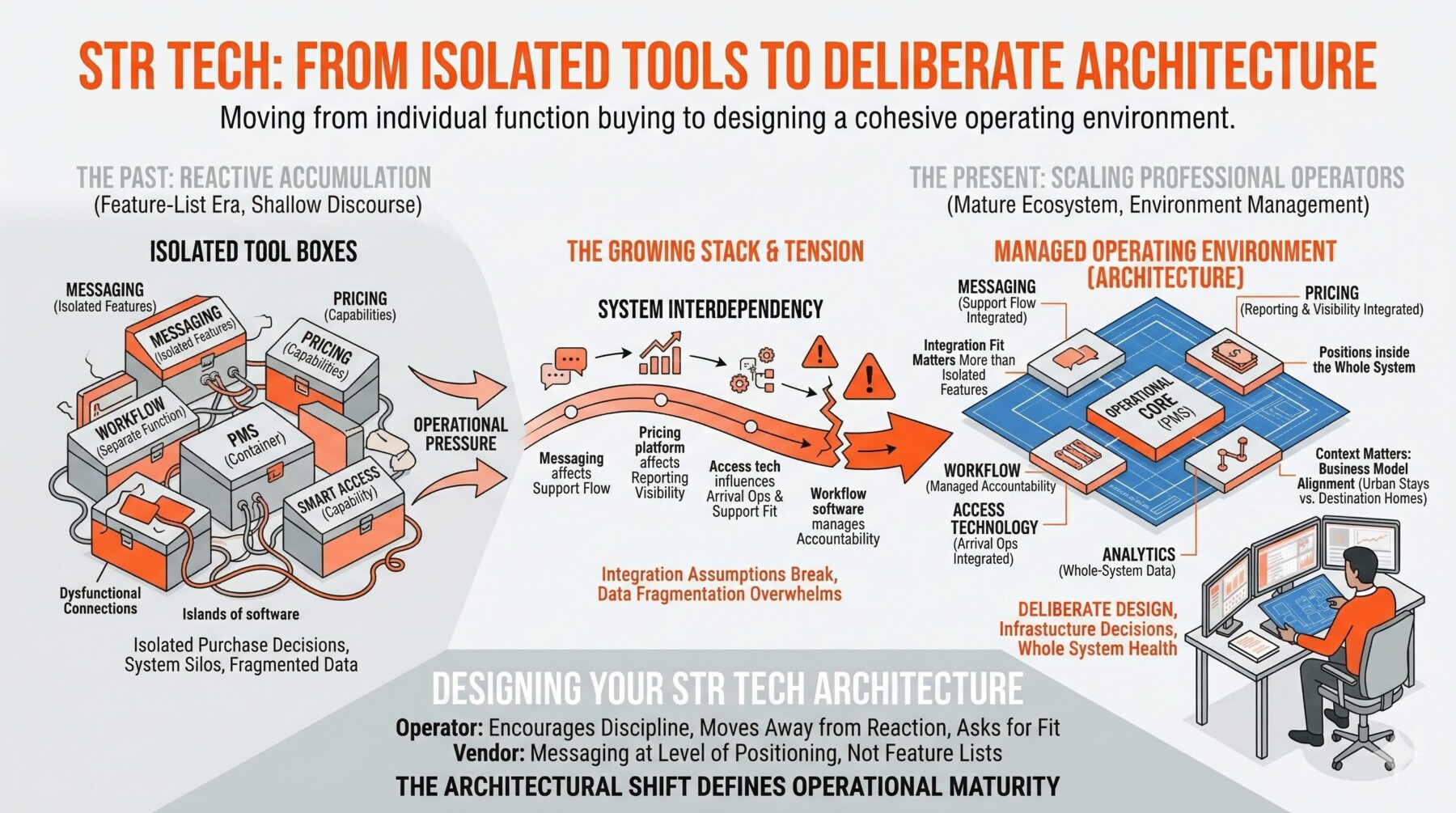
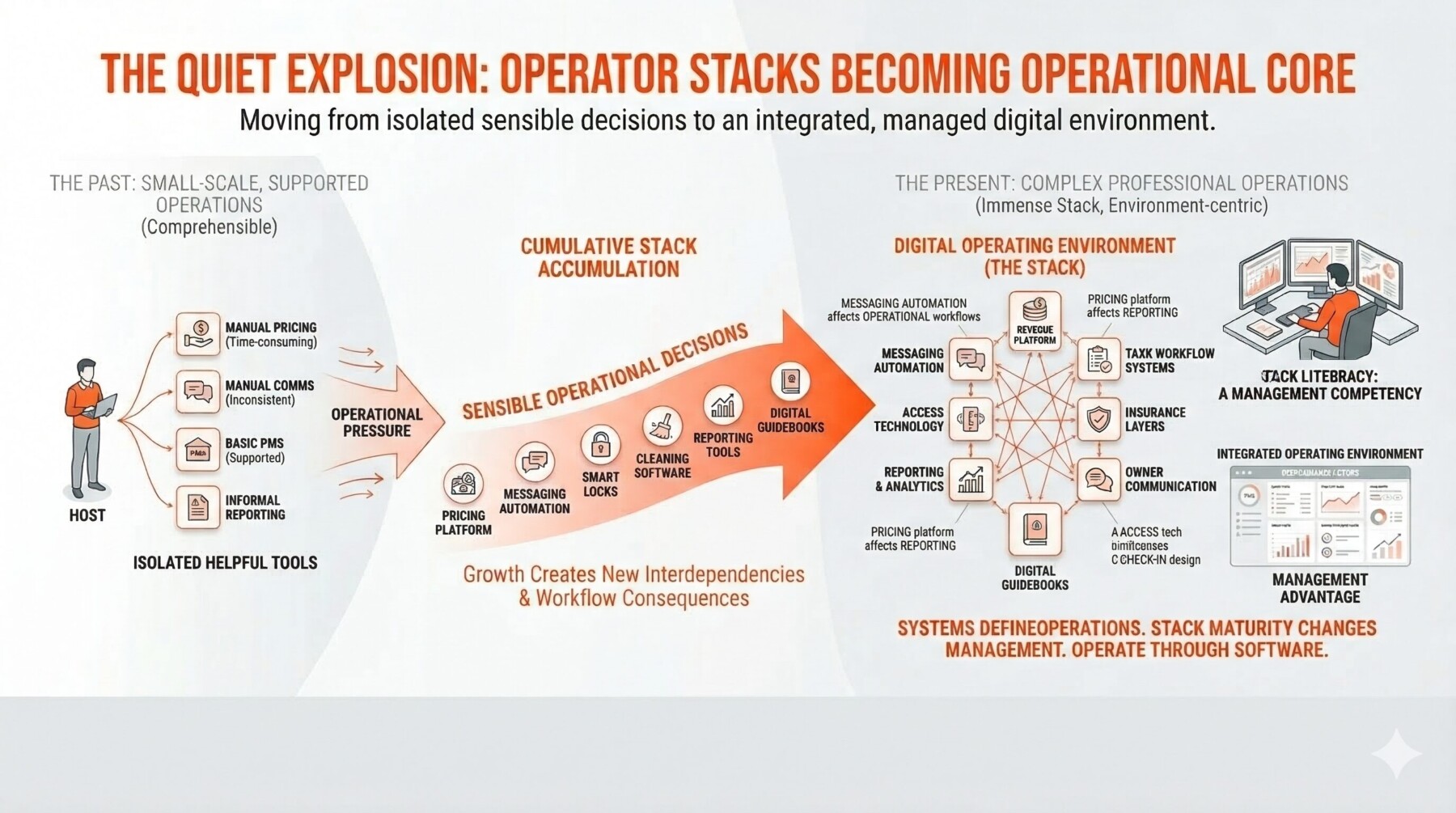
Once multiple systems sit inside the business, every new software decision changes something wider than the category in which it was purchased. A communication platform affects support flow. A pricing system affects reporting and performance visibility. Access technology influences arrival operations and guest support. Workflow software affects task delegation, accountability and escalation.
At that point, the relevant question is no longer simply “Which product has the best features?”
It becomes “What kind of operating environment are we building, and what role does this system play inside it?”
That is architecture thinking.
What architecture thinking really means
It is not about diagrams for their own sake, and it is not an argument for unnecessary complexity. It is a recognition that once systems become interdependent, the health of the whole matters more than the attractiveness of the parts.
This is one reason some operators feel disappointed after software roll-outs that looked promising on paper. The chosen product may be strong, but the surrounding environment may not support it well. Integration assumptions may be wrong. Process implications may have been underestimated. Teams may adopt only part of the workflow. Data may become fragmented between systems that were never really evaluated together.
In other words, the issue is not always product quality. Often it is architectural fit.
That is a more mature way of looking at technology problems, and the industry is only partly there.
Many conversations in STR still treat software as though it exists in separate containers: PMS here, pricing there, messaging over there, analytics somewhere else. But real operations do not experience technology that way. The business experiences the stack as a single environment with multiple interaction points.
The more serious the operator, the more obvious this becomes.
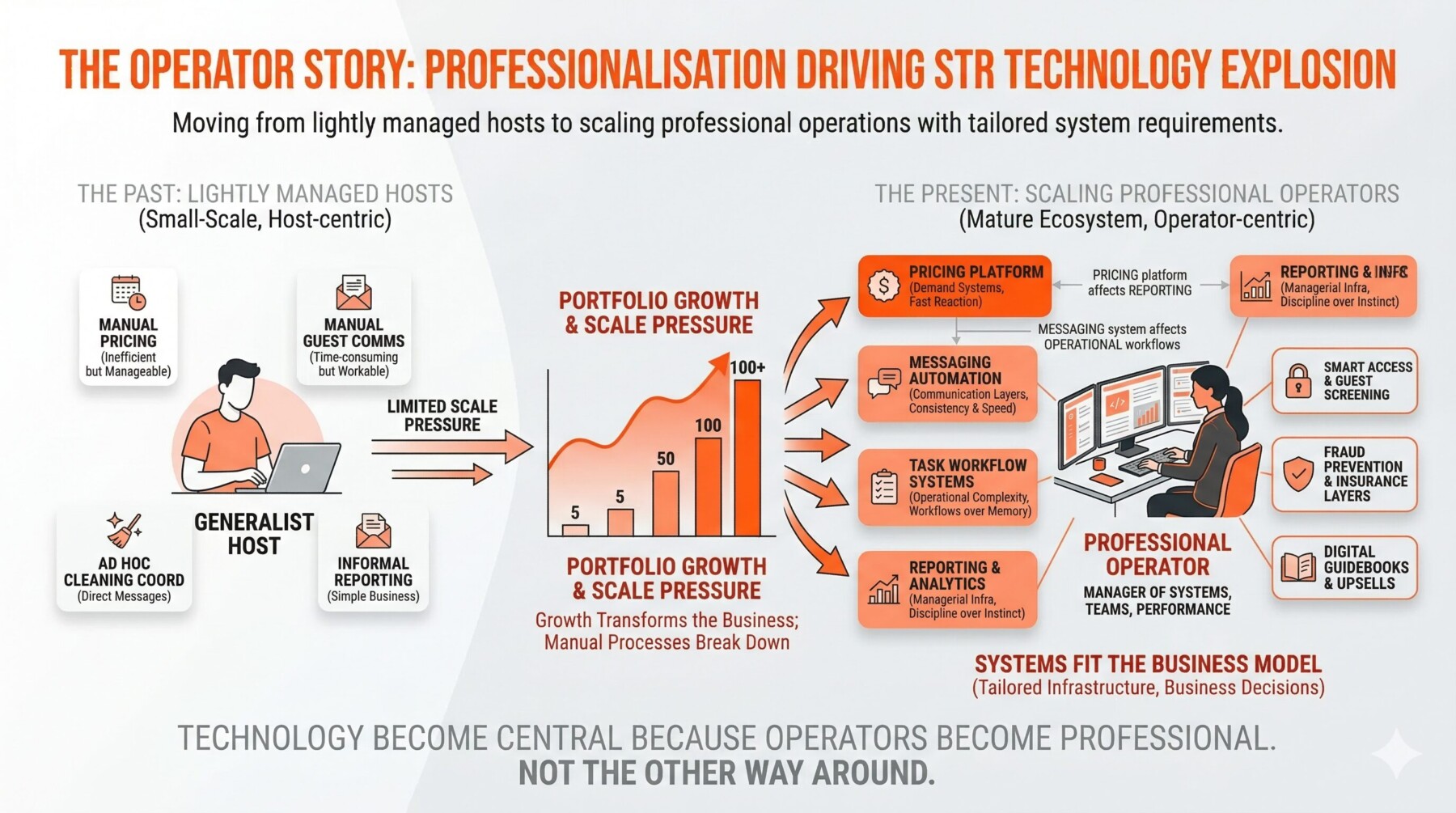
A company managing premium urban stays with high guest turnover may need a very different combination of infrastructure from a portfolio of destination homes with longer stays and a different service rhythm. A business with centralised teams will evaluate workflows differently from one structured around local market pods. A manager prioritising owner reporting and transparency will think differently about system design from one optimising for operational throughput and margin.
This is why architecture matters. It introduces context, and context is what shallow software discourse often lacks.
Why architecture matters
For vendors, this shift is also important. If buyers are increasingly thinking in architectural terms, then product messaging that stays at the level of isolated features becomes less effective. Operators need help understanding where a system sits in the wider environment, what kind of business it suits, and how it interacts with the rest of the stack.
Feature lists do not answer those questions well. Positioning does.
For operators, architectural thinking creates discipline. It encourages a move away from reactive software accumulation and towards deliberate environment design. It asks whether a new system is solving a real problem, whether it fits the operating model, whether the integration assumptions are sound, and whether the business is becoming cleaner or more fragmented as a result.
This is not about perfection. Few stacks are perfect. Most are shaped by time, urgency and compromise.
But there is still a meaningful difference between an environment that has evolved thoughtfully and one that has simply accumulated.
That is the difference architecture thinking helps make visible.
The STR sector is now reaching the point where it needs more of that visibility.
Because in a true ecosystem, technology decisions do not stop at purchase.
They shape the structure of the business itself.
Rethink how you evaluate your current systems and consider what kind of operating environment you are building.
The next stage in this series looks at a different but related issue: even as stacks become more complex, vendor discovery in STR is still surprisingly unstructured.
Follow SCALE Connect on Linkedin