The landscape of global travel distribution is undergoing a seismic shift. Recently, industry insiders noted a subtle but profound update sent to partners of major Online Travel Agencies (OTAs). The message was framed as a technical refinement: algorithms are being updated to “optimize relevance,” effectively decreasing the baseline visibility of entry-level loyalty discounts (such as the standard 10% Genius tier).
While it sounds like a routine maintenance update, it reveals a deeper tension between platforms, providers, and the emerging era of Artificial Intelligence.
The “Value” Paradox: Price vs. Experience
In communication from major booking platforms, “value” is frequently cited as a primary ranking factor alongside availability and pricing. However, for Property manager, a critical question arises: Where are the metrics for hospitality?
If the goal were truly the quality of the stay, the algorithm would prioritize service scores, guest sentiment, and unique property attributes. Instead, in the world of high-speed digital transactions, “value” is often code for conversion probability. The algorithm isn’t necessarily looking for the property where the guest will be happiest; it’s looking for the unit the guest is most likely to book immediately at the lowest price point.
The Death of the “Lazy” Model
For two decades, the global hospitality model operated on a relatively simple auction system:
-
Pay higher commissions.
-
Offer deeper discounts.
-
Receive top-tier visibility.
It was a “lazy” ecosystem that worked for everyone. Property managers filled their properties without complex marketing strategies, and platforms collected massive commission checks. But this model is under threat from Agentic AI.
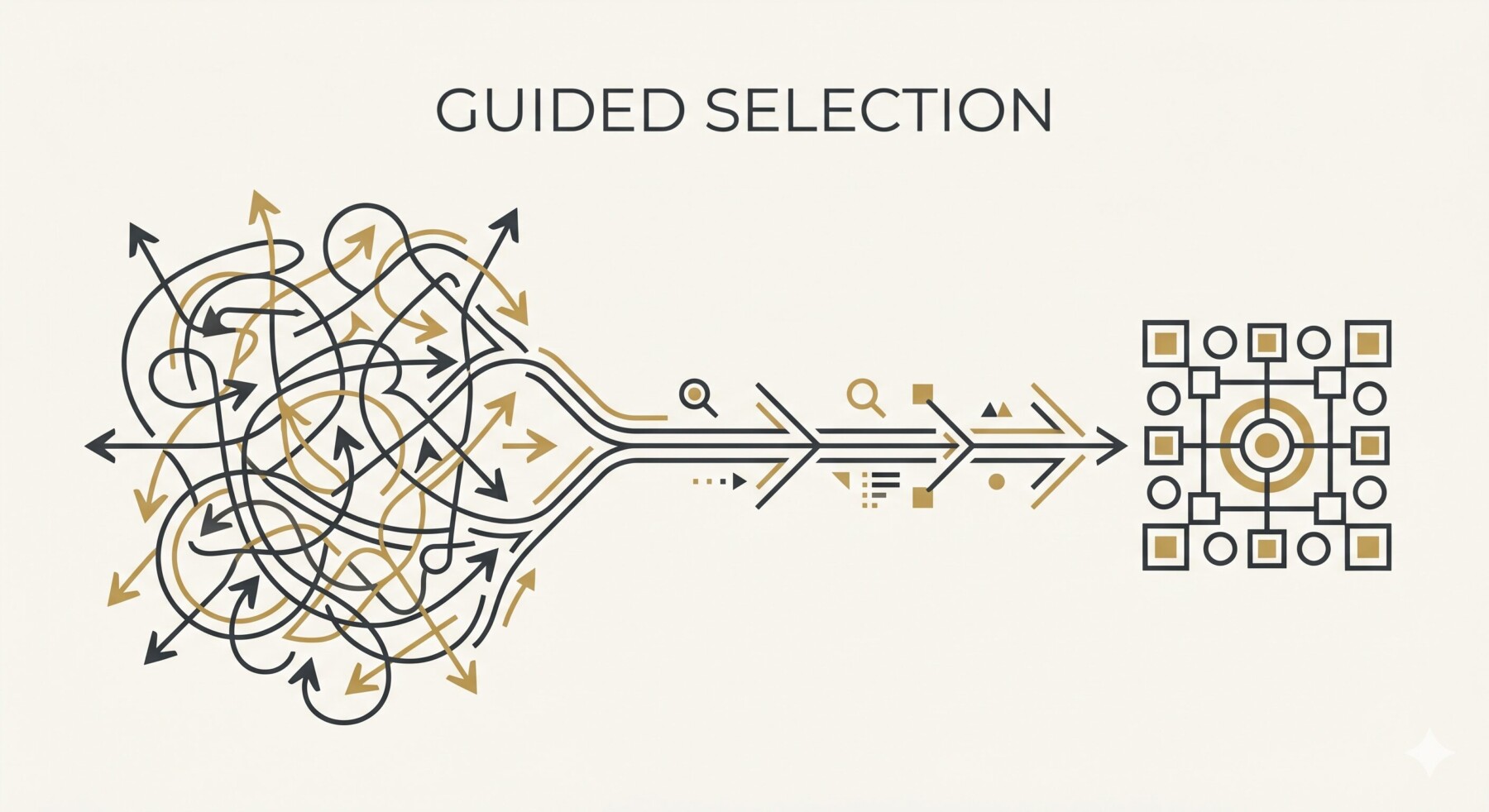
We are moving away from the era of “Search” (scrolling through fifty pages of “Apartment in Paris”) and toward the era of “Answers.” A modern traveler doesn’t want a list; they want a solution. They ask an AI: “Find me a large apartment in Paris that is quiet enough for video calls, has a gym, and is within walking distance of a specialty coffee shop.”
Why the Platforms are Pivoting
AI agents look for substance, structured data, and authentic reputation. They are indifferent to who pays an 18% commission; they care about who best answers the user’s specific prompt.
Platforms recognize that if they continue to promote mediocre properties simply because those properties “pay to play,” they will lose the trust of the user. To counteract this, we are seeing a “devaluation” of basic loyalty tiers. By making the standard 10% discount less effective, platforms nudge operators toward deeper discounts (15% or 20%) to regain lost visibility. It is a race to the bottom where the PMC’s margin is used to fund the platform’s relevance.
Strategy for the Future: Building What Can’t Be Bought
If the old model of “pay to exist” is declining, a fundamental truth remains: Reputation cannot be bought; it must be built. For forward-thinking Managers, the most intelligent investment is not a deeper discount, but a stronger identity.
1. Transition from Commodity to Identity
If your selection criteria remain solely “price and availability,” you are a commodity—a product on a supermarket shelf. To survive AI-driven search, you must define what makes you unique.
2. Optimize for “Answer Engines”
Your digital presence must speak the language of AI. Instead of generic descriptions like “beautiful rooms,” use specific, data-rich attributes: “Soundproofed suites with memory foam mattresses and ergonomic workstations.” This is the “substance” AI agents look for.
3. Reputation as the Ultimate Validator
In an AI-mediated world, guest reviews are no longer just feedback; they are the primary data points that AI respects. Managing your online reputation is now a core technical requirement for visibility.
The Bottom Line The “pay-for-visibility” era is being disrupted by a “search-for-substance” era. While platforms may try to squeeze more margin out of providers to maintain the status quo, the ultimate winners will be those who invest in their own brand and guest experience rather than just their algorithmic ranking.