
From Lifeline to Liquidation: Marriott-Sonder Partnership Collapse Leads to Immediate Bankruptcy and Guest Chaos

Posted on - November 11th 2025
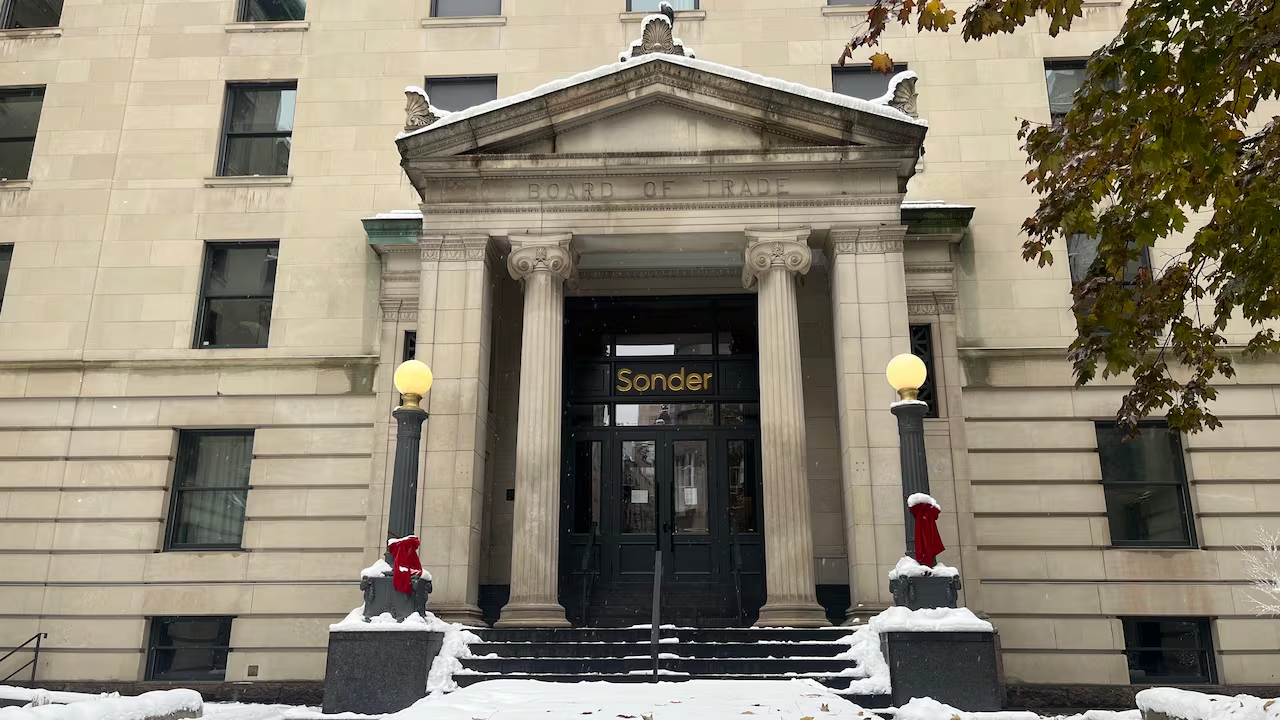
The high-profile partnership between hospitality giant Marriott International and apartment-style accommodations provider Sonder Holdings Inc. has culminated in a dramatic collapse, with Marriott terminating its licensing agreement over financial default and Sonder immediately announcing its wind-down and impending Chapter 7 liquidation in the U.S.
The abrupt termination, which took effect on a Sunday, severed Sonder properties from the Marriott Bonvoy booking platform and triggered immediate chaos for thousands of guests and employees globally.
The Downfall: Financial Default and Integration Failure
Marriott International announced the termination on Sunday, November 9, 2025, citing a default on financial obligations by Sonder. The quick end marked a stunning reversal for the 20-year licensing agreement, which was signed with great fanfare in August 2024. The deal was intended as a lifeline, promising to inject approximately $146 million in liquidity into Sonder and bring over 9,000 apartment-style units into the Marriott system.
However, the partnership quickly soured. Sonder, which had been struggling with mounting losses and late earnings reports, officially blamed “prolonged challenges in the integration of the company’s systems and booking arrangements with Marriott International.”
-
Sonder’s Stance: Interim CEO Janice Sears stated that “unexpected challenges in aligning our technology frameworks” led to “significant, unanticipated integration costs, as well as a sharp decline in revenue arising from Sonder’s participation in Marriott’s Bonvoy reservation” system.
-
A History of Distress: Before the partnership’s dissolution, Sonder had been grappling with a history of negative operating cash flows and a high-cost, asset-heavy model based on long-term leases—a vulnerability that became critical as interest rates rose. Both the CEO and CFO had already departed earlier in 2025. In an October SEC filing, Sonder warned of “substantial doubt” about its ability to continue as a going concern.
Guest and Employee Fallout: Abrupt Evictions and Layoffs
The consequences of the collapse were immediately and painfully felt across the globe:
Mass Evictions: In cities from Philadelphia to Montreal and New York City, guests staying at Sonder properties received less than 24 hours’ notice—in some cases via email or a note slipped under the door—to vacate their rooms by 9 a.m. the following morning.
Many guests were mid-stay, prepaid, and were forced to scramble for last-minute, expensive alternative accommodations.
Social media accounts reported harrowing experiences, including being locked out of rooms due to disabled electronic door codes or returning to find their belongings packed up and left in hallways.
Immediate Layoffs: The approximately 1,400 Sonder employees across 35 cities in 10 countries were laid off abruptly, with many reporting they learned of the job cuts from news reports rather than internal communication.
Marriott stated its “immediate priority is supporting guests currently staying at Sonder properties and those with upcoming reservations,” offering assistance and refunds to those who booked directly through Marriott channels.
The SPAC-Era Casualty
Sonder’s bankruptcy marks a high-profile casualty of the Special Purpose Acquisition Company (SPAC) boom that peaked a few years ago.
-
Sonder merged with a blank-check firm in 2021 at an initial valuation of $2.2 billion.
-
By late 2025, filings with the SEC showed the company’s valuation had plummeted to a negligible $6.8 million just before the collapse, with its stock trading for mere cents.
The company has initiated a court-supervised liquidation, with international insolvency proceedings underway.
Marriott Weathers the Storm
Marriott, meanwhile, appears positioned to absorb the partnership’s failure with minimal long-term damage.
The company revised its 2025 net room growth forecast downward slightly from 5% to approximately 4.5%, reflecting the removal of roughly 7,700 Sonder rooms across 142 properties.
No other financial outlook metrics were changed from their previous forecast, signaling the company’s overall strength remains intact despite the significant operational disruption.
The Sonder saga serves as a cautionary tale in the hospitality sector, highlighting the precarious nature of “tech-enabled” real estate models that are heavily reliant on fixed-cost obligations and rapid scaling, particularly when facing complex technological integration with legacy platforms.
Related Articles

Fresh from the press

Data & Market Trends
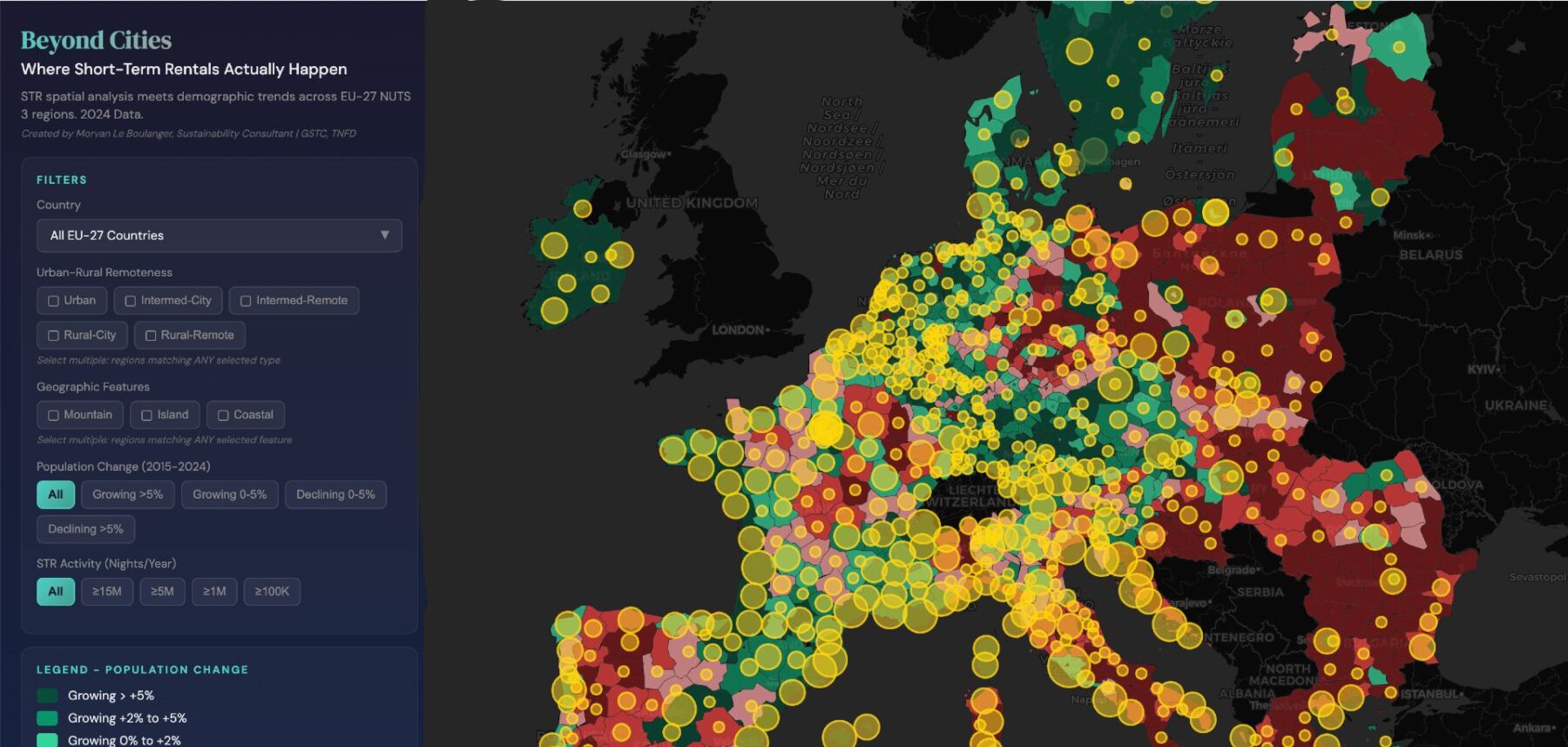
Beyond Cities: Where short-term rentals actually happen
More than half of Europe’s short-term rental activity happens outside cities. A data-led look at STR geography and destination management.