5 Hospitality Marketing Trends for 2026
Nikki Mattei shares 5 of the top consumer trends for 2026 which have an impact on the short-term rental and hospitality industries.

Posted on - December 3rd 2025

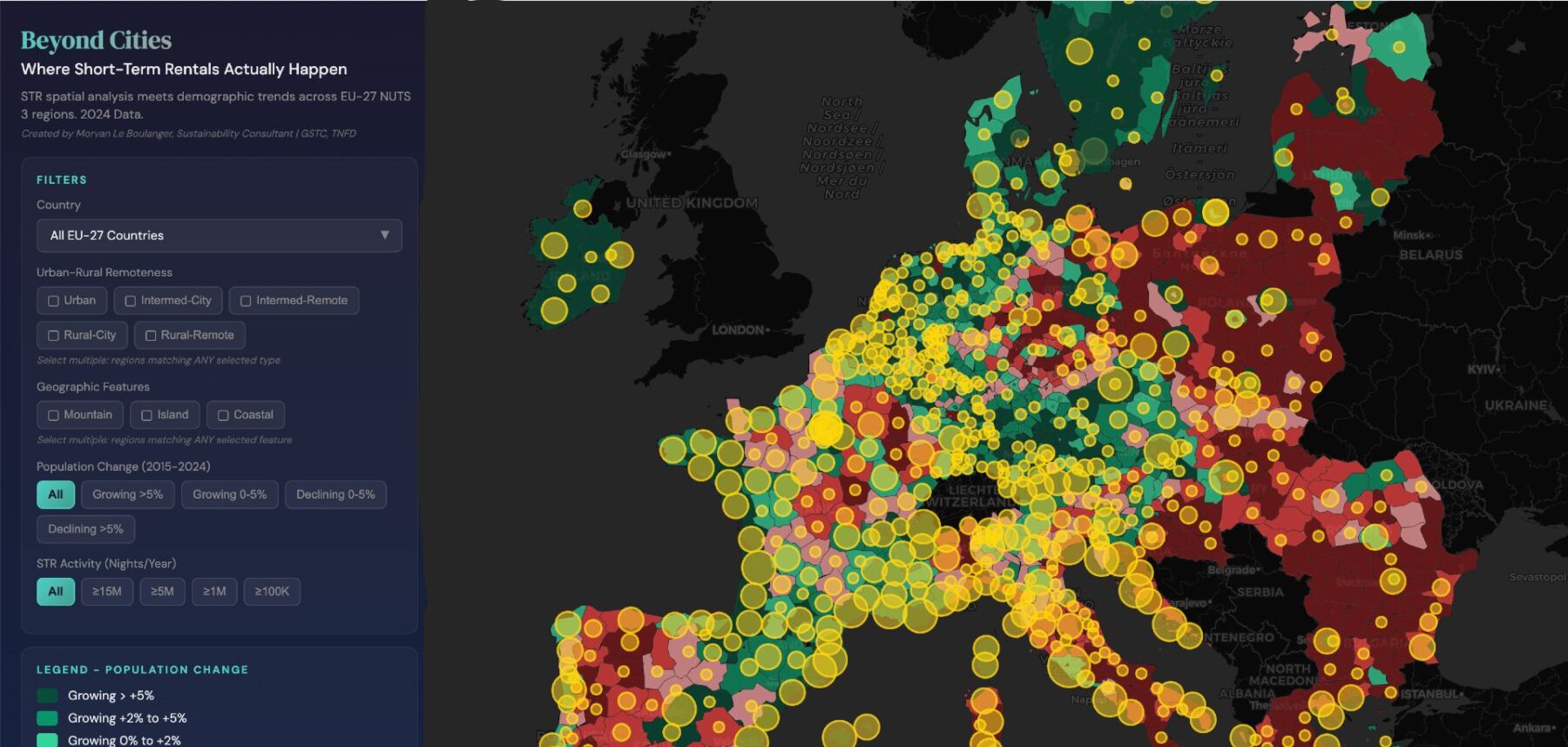
Last summer, water restrictions hit Barcelona’s peak tourist season. Wildfires closed properties across Greece and Portugal during July and August—the most profitable weeks of the year. Ski resorts watched snowpack decline year after year.
These aren’t isolated incidents. They’re the new normal.
The short-term rental sector faces a choice: continue business as usual and watch climate risks erode margins during peak season, or build organizational capacity to adapt faster than competitors.
Here’s what most operators miss: resilience isn’t about having the perfect plan. It’s about building the organizational capacity to adapt quickly when conditions change.
Traditional risk management focuses on predicting and preventing specific threats. But climate and nature-related risks don’t work that way—they’re unpredictable, interconnected, and accelerating. Water scarcity, wildfires, regulatory changes, and market shifts don’t arrive one at a time with warning labels.
Resilience is different. It’s the capacity to absorb shocks, adapt operations, and continue functioning when conditions change. And that requires cultural transformation, not just new technology or compliance programs.
The Taskforce on Nature-related Financial Disclosures (TNFD) is the nature equivalent of climate risk reporting. Think of it as a framework that forces you to ask: “What natural resources does my business depend on, and how resilient am I when they’re degraded?”
For STR operators, this reveals three critical vulnerabilities:
Location dependency: Your premium assets sit in nature-sensitive locations. Coastal properties face erosion and storm surge. Ski resorts depend on snowpack. Rural retreats need clean water and intact ecosystems. Mediterranean properties face water scarcity, wildfire risk in Catalonia, Greece, and Portugal—all during peak summer season when your occupancy and rates are highest.
Operational impacts: Water consumption, waste generation, cleaning chemicals, energy use. These create regulatory and reputational risks that affect your ability to operate.
Market access: Institutional investors increasingly include ESG criteria in their acquisition decisions, and some deals are falling through when properties fail to meet these standards (Energy & Environment Alliance, 2025). A growing segment of travelers seeks nature-positive properties and pays premium rates.
The question: Are you building the capacity to adapt to these shifts, or waiting for them to force your hand?
Stop treating sustainability as compliance, marketing, or cost reduction. Frame it as what it really is: building capacity to adapt to disruption. It’s your ability to respond when regulations tighten, when water becomes scarce during peak season, when wildfires threaten properties, when guest expectations shift. Properties without nature-positive strategies aren’t just missing opportunities—they’re accumulating vulnerabilities that competitors are already addressing.
This is where most initiatives die. Building agility requires getting people to change behavior, which means understanding their motivations. Use structured approaches like ADKAR (Awareness, Desire, Knowledge, Ability, Reinforcement):
Map stakeholder motivations: Property owners think about return on investment and upfront costs. Operations teams think about workload and complexity. Staff think about job security and being micromanaged. Understanding these different perspectives lets you craft messages that resonate and address real concerns rather than talking past people.
Tailor your narrative: Don’t lead with “sustainability.” Talk premium positioning and guest demand to sales teams. Frame it as risk management and regulatory compliance for executives. Emphasize technology and efficiency for IT. Each stakeholder needs to hear what matters to them.
Make it concrete: Don’t say “reduce consumption.” Say “Property 304 is costing €12/hour because windows are open with AC running.”
Pilot and prove: Start with willing participants. Document results. Let ROI do the convincing.
Culture is what your night-shift cleaner does when no manager is watching.
The gap between brand claims and operational reality is your biggest vulnerability. Guests fact-check sustainability claims. One viral post showing your “eco-certified” property using harsh chemicals or wasting water can destroy years of brand building.
But more importantly, culture determines how fast you can adapt. Organizations where sustainability is just marketing need executive approval for every decision. Organizations where it’s embedded in culture empower staff to make decisions that build resilience daily.
Make environmental criteria real: actual procurement standards, staff empowerment to make sustainability decisions, visible KPIs alongside revenue metrics. Agile organizations don’t need permission to adapt—they have the cultural foundation to respond quickly when conditions change.
STR operators increasingly face backlash as businesses that extract value without contributing locally. This creates regulatory risk—municipalities can (and do) restrict STR operations.
Flip the narrative. Become a key local player: source from local suppliers, hire locally, partner with community organizations on nature restoration projects, support local tourism infrastructure, share your sustainability data with municipalities.
Properties embedded in their communities gain social license to operate, navigate regulations more easily, access local knowledge about climate risks, and build reputational buffers. When communities see you as partners in nature preservation rather than just another rental business, you transform your greatest regulatory risk into competitive advantage.
The window for building agility is narrowing. Regulations are tightening. Climate impacts are accelerating. Guest expectations are rising.
Start with honest assessment:
Build capacity systematically:
Track what matters:
This transformation takes time. But properties starting now don’t just survive disruptions—they adapt faster than competitors and capture opportunities others miss.