
The Rise of the Flexible Stay: A Midterm Rental Comparison (US vs. Europe)

Posted on - December 10th 2025

The midterm rental market—stays typically spanning 30 days to a few months—is revolutionizing furnished housing on both sides of the Atlantic, driven by global mobility and the remote work boom. While the core value proposition of MTRs (stability, predictable revenue, and flexible furnished options) is universal, the execution, market drivers, and regulatory environment create distinct ecosystems in the United States and Europe.
🇺🇸 The U.S. Midterm Model: Velocity and Volume
In the U.S., the MTR revolution has been primarily driven by niche platforms scaling rapidly to meet the needs of specific, high-demand professional segments:
-
Core Demand: The market exploded primarily to service traveling professionals, particularly healthcare workers (travel nurses), corporate transferees, and consultants seeking reliable, furnished, and vetted housing.
-
Supply Model: The model relies heavily on independent landlords who find MTRs a sweet spot, avoiding the regulatory and operational headache of nightly short-term rentals (STRs) while earning more than a traditional long-term lease.
-
Operational Focus: The key is trust and rigorous vetting. Platforms focus on providing tools for host-tenant matching, extensive background and employment checks, and secure payment processing for monthly deals, prioritizing a deliberate pace over instant booking.
-
Regulatory Status: While STR regulations are tightening, the MTR model (30+ days) in many U.S. jurisdictions largely avoids the heaviest restrictions, making it a regulatory haven for diversified hosts.
🇪🇺 The European Midterm Model: Regulation as a Catalyst
In Europe, the MTR phenomenon is less about creating a new category and more about adapting an existing one in response to dense urbanism and increasingly aggressive STR regulation.
-
Core Demand: Demand is heavily influenced by digital nomads, international students, relocating corporate employees, and a strong culture of temporary or seasonal work. Cities like Lisbon, London, Berlin, and Paris are major hubs.
-
Supply Model: The European market features a mix of independent hosts and larger, professional operators and dedicated platforms (like Blueground or Homelike) that manage corporate-style housing.
-
Regulatory Driver (The Key Difference): For many European cities (e.g., Barcelona, Madrid, Paris), stringent night caps (e.g., 60 or 90 nights per year) and burdensome registration for traditional STRs have acted as a major catalyst. Renting for 30 days or more often exempts properties from the tourist tax, licensing, and annual night limits, pushing substantial inventory into the MTR category.
-
Housing Context: European housing stock is often denser, with a higher percentage of the population renting apartments long-term, making the transition to MTR a more direct competitor to the long-term rental market than in the more dispersed U.S. landscape.
The Global Outlook
Both markets are converging on the same profitable model: predictability over volume. MTRs offer hosts longer guest commitments, fewer damages, less property turnover, and a pricing structure that yields superior cash flow compared to volatile nightly markets.
However, as MTRs absorb inventory from the STR market, both continents will face the same challenge: how to manage the impact of MTRs on the long-term housing supply and affordability. Adaptive operators who can master the unique regulatory landscape of their respective markets—by excelling at guest vetting in the US or navigating strict local licensing in Europe—will be best positioned to capitalize on this enduring shift.
Related Articles

Data & Market Trends
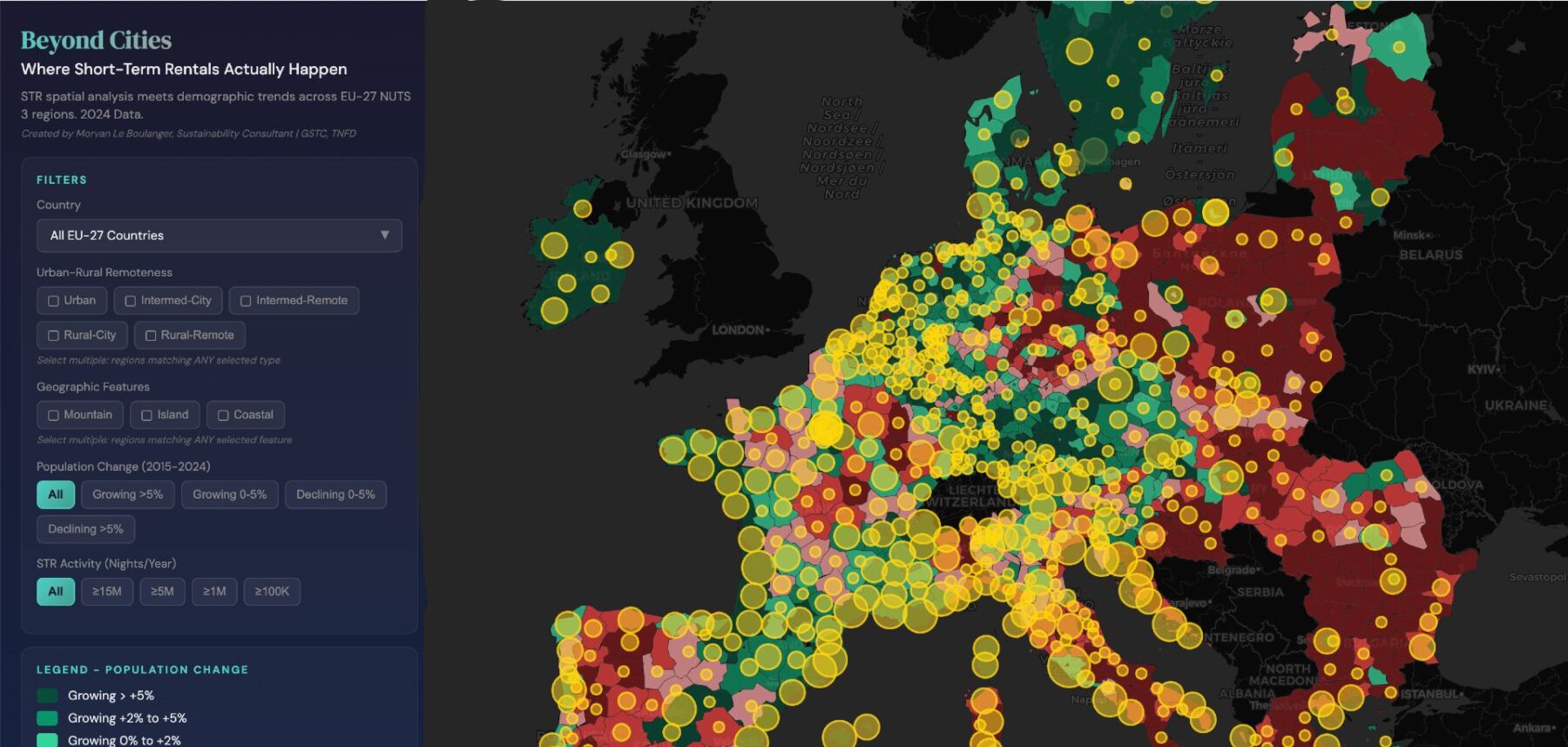
Beyond Cities: Where short-term rentals actually happen
More than half of Europe’s short-term rental activity happens outside cities. A data-led look at STR geography and destination management.
Fresh from the press
Data & Market Trends
Beyond Cities: Where short-term rentals actually happen
More than half of Europe’s short-term rental activity happens outside cities. A data-led look at STR geography and destination management.