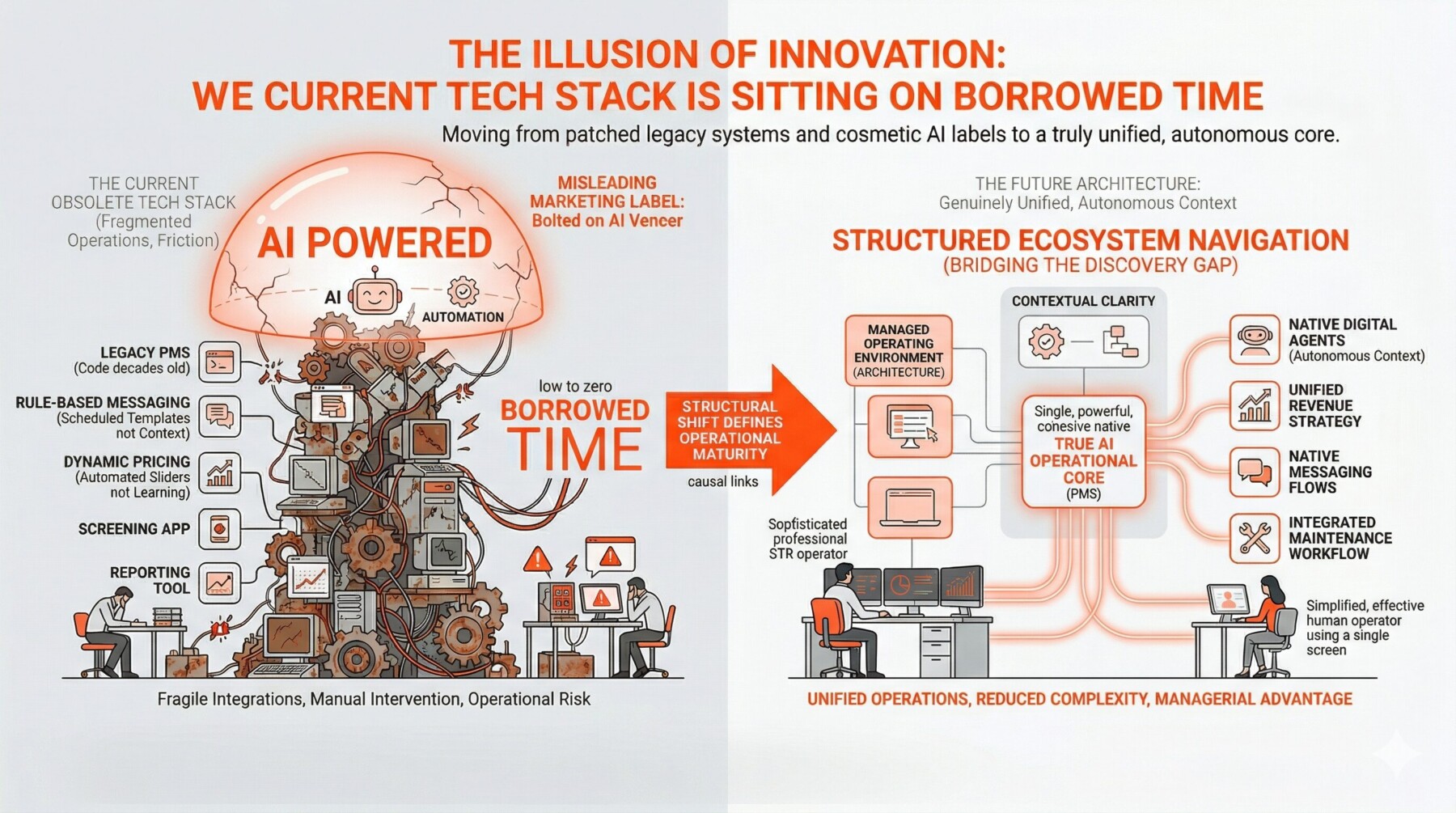
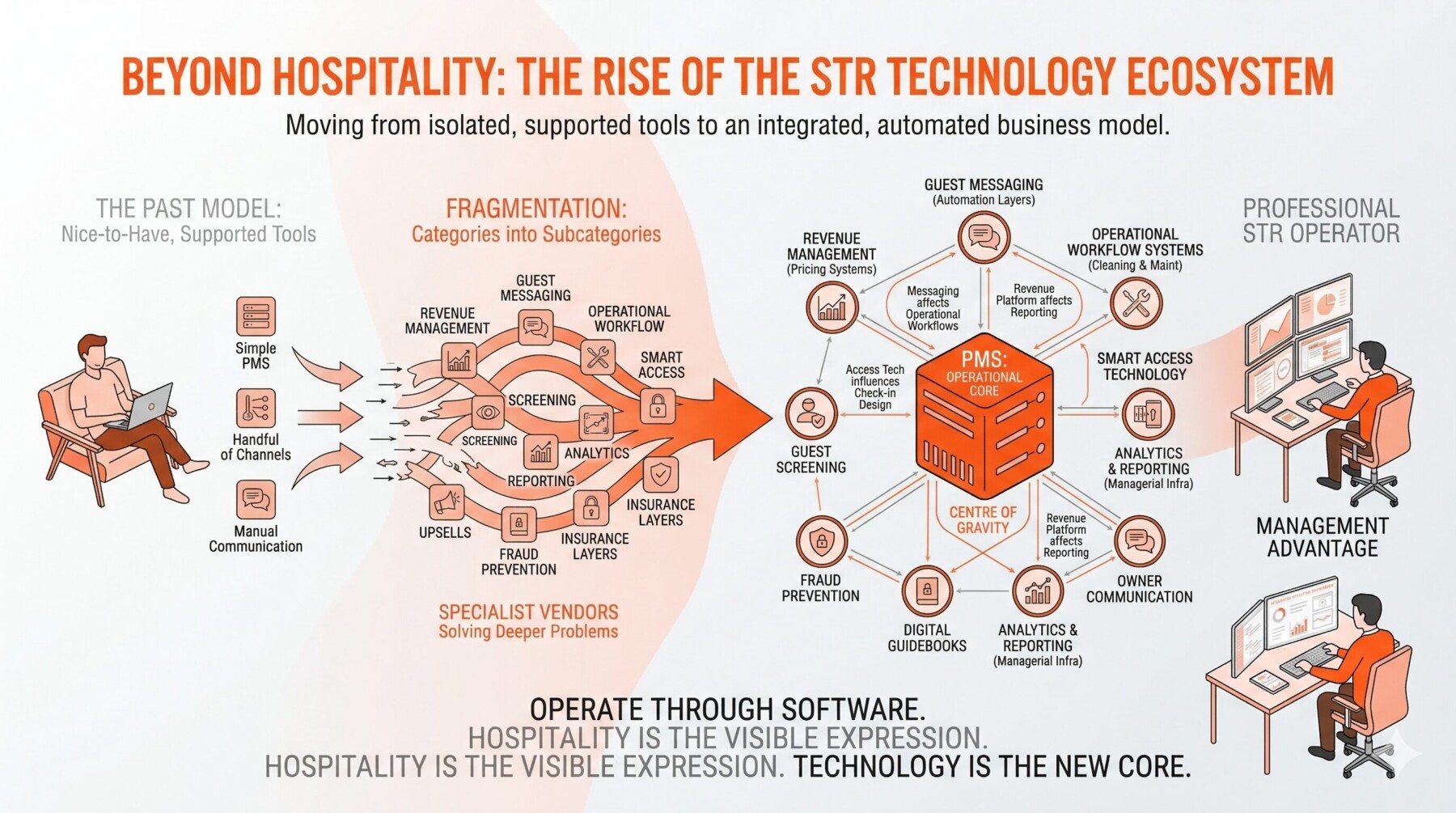
The short-term rental technology stack is sitting on borrowed time. For the past five years, professional operators have carefully built complex ecosystems featuring property management systems, dynamic pricing engines, and messaging tools. These interconnected stacks feel highly advanced today, but they are rapidly approaching their end of life. The architecture of the future will not look like a heavily patched together web of isolated software categories. We are at the edge of a fundamental shift that will render the current digital environment obsolete.
The AI-Powered Marketing Trap
Right now, the property management market is absolutely flooded with the phrase artificial intelligence. Almost every vendor is rushing to slap an AI-powered label onto their existing legacy products. Operators are being aggressively sold simple chatbots that sit on top of old databases, or automated pricing sliders that have been hastily rebranded as machine learning. This is a classic trap that the industry must learn to recognise.
Bolting a language model onto an outdated operational core does not magically transform a business. It merely adds a shiny, modern veneer to the exact same rigid workflows. True artificial intelligence is not a feature you simply switch on within a traditional piece of software. It is a completely different way of structuring and processing information. When vendors use artificial intelligence purely as a marketing tactic, they are doing a disservice to the genuine complexity of property management.
True Disruption vs Cosmetic Updates
A genuine technological shift does not just change how a digital tool looks; it changes how the underlying data actually behaves. The current short-term rental ecosystem heavily relies on highly structured, isolated databases attempting to speak to one another through fragile application programming interfaces. When one single connection breaks, the whole operation feels the tremor.
The next generation of technology will not be a collection of isolated apps struggling to sync. It will feature native digital agents that understand the entire operational context simultaneously. These new systems will move fluidly between guest communication, revenue strategy, and physical maintenance without ever needing to be told which specific tool to open. They will not just report on data; they will actively synthesize it to make structural business decisions.
Preparing for the Real Evolution
Property managers must look past the immediate marketing hype. When evaluating new software today, the critical question is no longer whether a product claims to use artificial intelligence. The real question is whether the architecture of the tool actually reduces operational complexity or simply adds yet another layer of management overhead to a creaking stack.
The current stack will become obsolete because it demands far too much human intervention just to keep the software itself functioning smoothly. The future belongs to platforms that genuinely unify operations at a foundational level. The operators who recognise the difference between true architectural innovation and clever cosmetic marketing will hold a massive competitive advantage in the years to come.