Once an industry becomes sufficiently rich in vendors, categories and specialist solutions, discovery itself becomes a market issue.
That is where the STR sector is now arriving.
Over the past decade, the ecosystem around property management has expanded rapidly. There are more tools, more specialised services, more operational layers and more nuanced differences between solutions than ever before. This reflects growth and maturity. It is, in many ways, a positive sign.
But growth has created a structural problem that the sector is only beginning to articulate clearly.
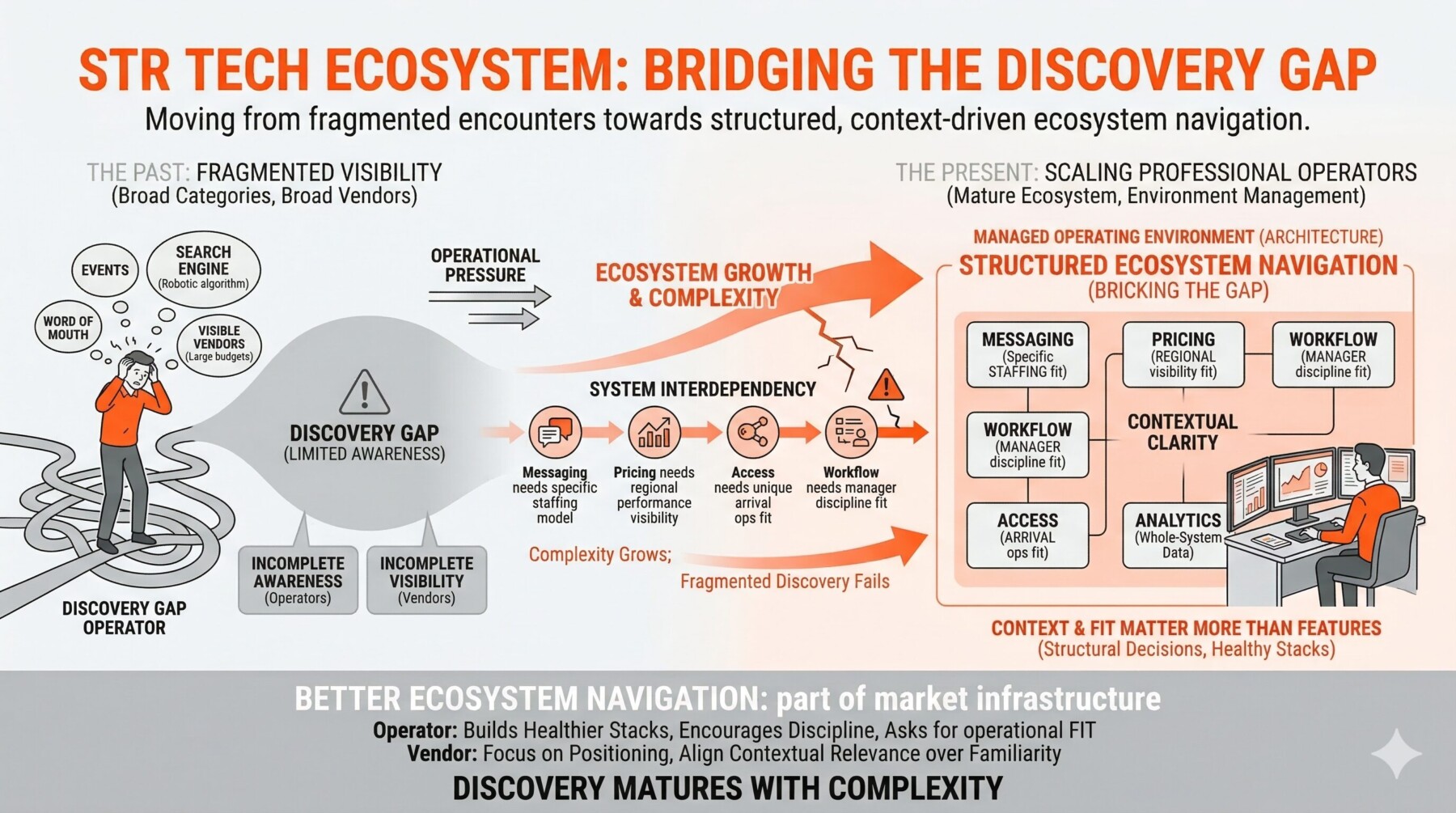
Operators do not discover the full field of relevant solutions. They discover a subset of it.
That subset is shaped by what they see at events, what appears in search results, what peers recommend, what is discussed most often, and which vendors are most visible in the channels they use. Some of those signals are useful. None of them, on their own or together, reliably produces a full or structured view of the ecosystem.
The Discovery Gap
The result is what can be described as the STR Discovery Gap.
The gap between the solutions an operator may genuinely need and the solutions they are realistically likely to discover.
This is not just a marketing issue. It is a structural one.
As long as the market was smaller and less specialised, the gap was easier to ignore. If categories were broad and vendors relatively few, fragmented discovery mechanisms could still function well enough. But once specialisation increases, the consequences change.
A buyer may not need “a messaging tool”. They may need a messaging layer designed for a particular operating rhythm, PMS environment, staffing model and guest experience standard. They may not need “analytics”. They may need visibility that reflects owner reporting needs, margin discipline or regional performance complexity. In a more mature ecosystem, fit becomes more contextual, and contextual markets require better discovery.
What incomplete discovery actually creates
Without it, two things happen.
Operators operate with incomplete awareness, and vendors operate within incomplete visibility.
This does not mean every operator is making poor choices. Many build strong stacks through experience, networks and iteration. Nor does it mean the most visible vendors are not good. Many are excellent.
The point is more structural than accusatory: the market’s discovery logic has not matured at the same pace as the market’s underlying complexity.
Wider consequences for the ecosystem
That gap has consequences beyond individual buying decisions.
It affects competition because visibility and relevance do not align as neatly as they should. It affects buyer education, because operators may learn about products without learning how the ecosystem fits together. It affects vendor positioning because companies are often forced to fight for attention in channels that reward familiarity more than contextual clarity.
And it affects the industry’s ability to understand itself.
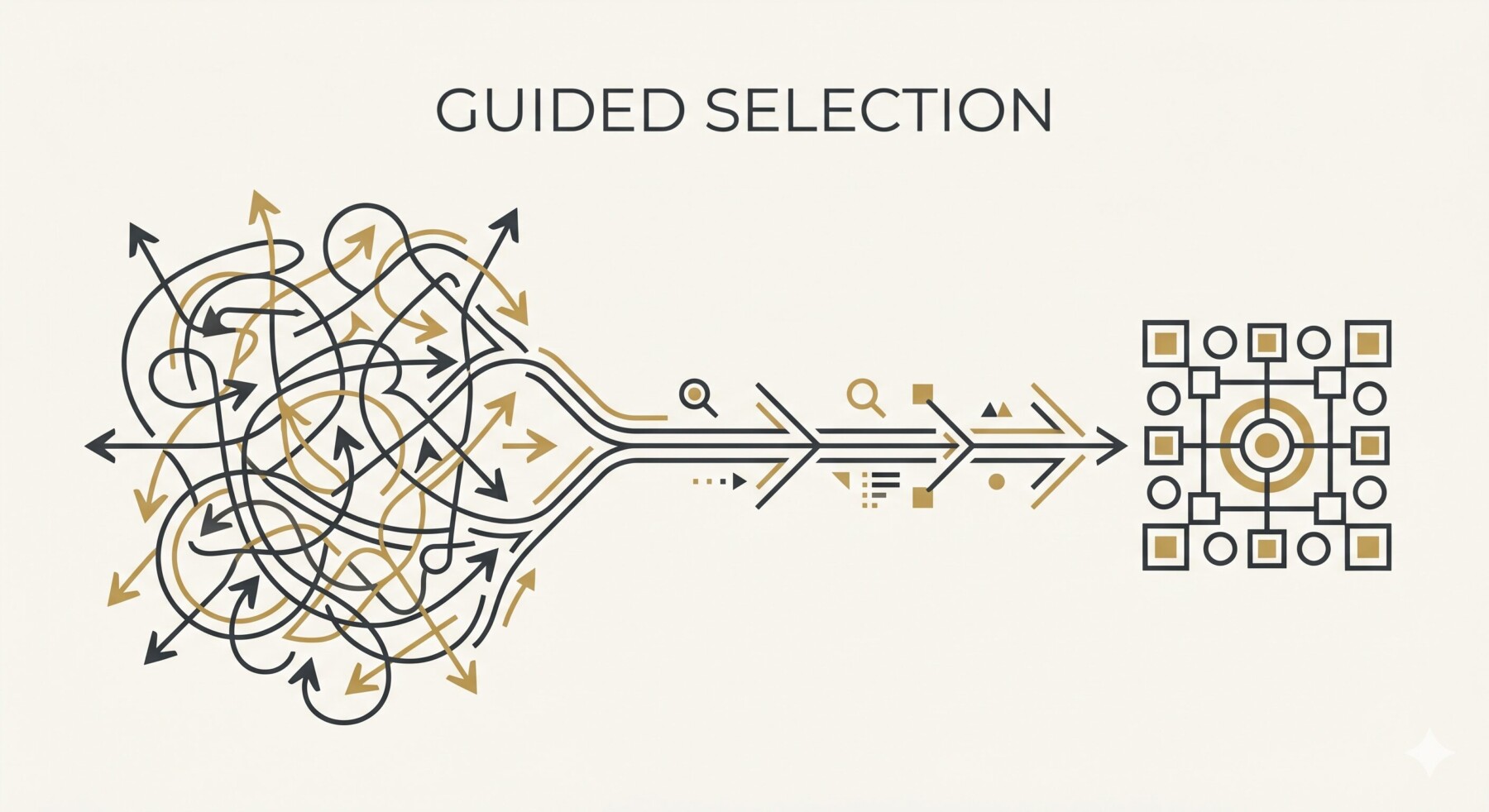
A mature ecosystem should not rely mainly on fragmented encounters to make itself legible. At some point, it needs mechanisms that help people see the structure of the market more clearly: the categories, the relationships, the fit, the overlaps, and the relevance.
That is why the Discovery Gap matters.
It is not just an elegant phrase for a common frustration. It is a way of describing a deeper market condition. The ecosystem has become more advanced than the pathways used to navigate it.
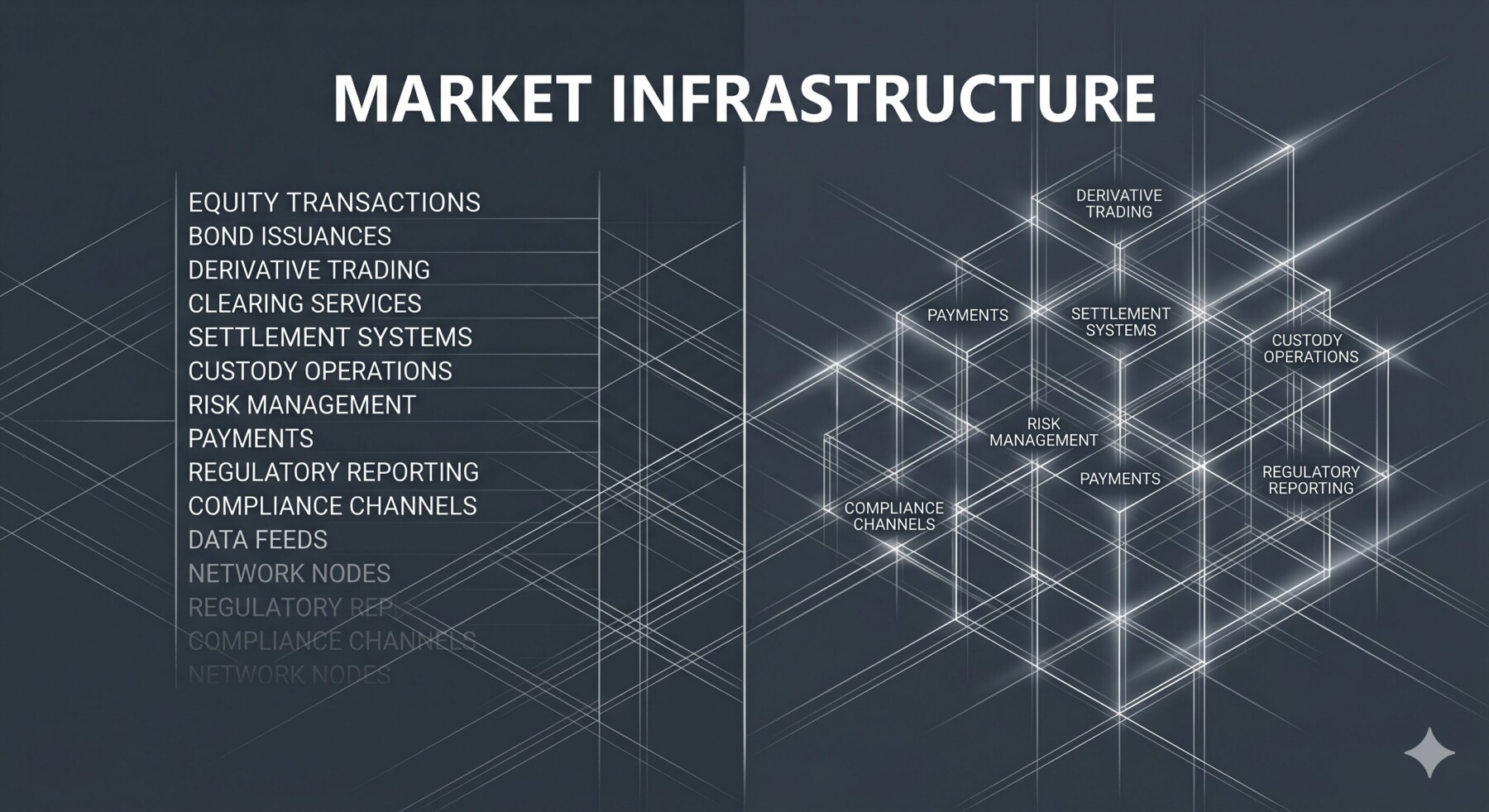
Discovery becomes part of the infrastructure
Once that is true, better discovery is no longer a secondary convenience.
It becomes part of the infrastructure the market needs.
That idea will matter increasingly over the next stage of the STR sector’s development. Not because the industry needs less innovation, but because it needs better ways of understanding the innovation it already has.
If the industry’s complexity is real, and the Discovery Gap is widening, what does better navigation of the ecosystem actually look like?
Follow SCALE Connect on Linkedin